7 Questions That Help Me Quit ChatGPT Plus and Every Subscription
- 1. How often do I use this product and for what purpose?
- 2. Does it really work for me, does it make me more productive, or is it just a habit?
- 3. Are the benefits I get worth the money and time I spend?
- 4. Could a more affordable alternative do the same job?
- 5. What would be missing in my life without this product?
- 6. If I saw it for the first time today, would I buy it again?
- 7. Why did I buy the paid version in the first place? Is it still relevant?
- Office 365 with the Same Questions
- 1. How often do I use this product and for what purpose?
- 2. Does it really work for me, does it make me more productive, or is it just a habit?
- 3. Are the benefits I get worth the money and time I spend?
- 4. Could a more affordable alternative do the same job?
- 5. What would be missing in my life without this product?
- 6. If I saw it for the first time today, would I buy it again?
- 7. Why did I buy the paid version in the first place? Is it still relevant?
Contents
- 1. How often do I use this product and for what purpose?
- 2. Does it really work for me, does it make me more productive, or is it just a habit?
- 3. Are the benefits I get worth the money and time I spend?
- 4. Could a more affordable alternative do the same job?
- 5. What would be missing in my life without this product?
- 6. If I saw it for the first time today, would I buy it again?
- 7. Why did I buy the paid version in the first place? Is it still relevant?
- Office 365 with the Same Questions
- 1. How often do I use this product and for what purpose?
- 2. Does it really work for me, does it make me more productive, or is it just a habit?
- 3. Are the benefits I get worth the money and time I spend?
- 4. Could a more affordable alternative do the same job?
- 5. What would be missing in my life without this product?
- 6. If I saw it for the first time today, would I buy it again?
- 7. Why did I buy the paid version in the first place? Is it still relevant?
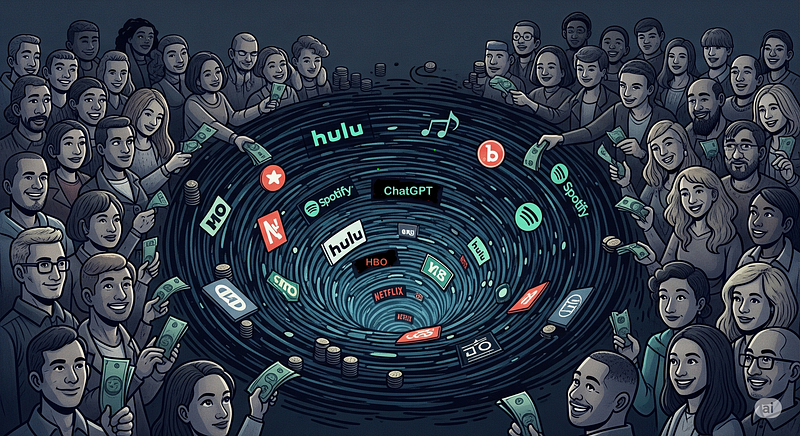
The image was created by ChatGPT, and the “ChatGPT” text was added by the author.
One day I woke up and stopped my $20 ChatGPT subscription. In this article, I’ll answer questions like:
Why?
Why subscribe to ChatGPT?
Why stop ChatGPT’s paid subscription?
First of all, as I do with every product these days, I asked myself: How much do I use it, and why do I use it?
Don’t worry, this isn’t one of those boring minimalism articles.
As you know, I am a blogger who likes to write different articles, especially away from clichés. However, I need to answer, shortly, the question of when, why, and under what circumstances should we stop using a product or a subscription service? This decision-making mechanism applies not just to ChatGPT, but to all kind of subscriptions, YouTube Premium, Spotify, Netflix, Office 365…
I immediately used ChatGPT’s deep search feature and had it research the reasons and steps involved in discontinuing a product at length(!). Just kidding, of course. Let me quickly share the questions I ask myself when deciding to quit a product or continue paying monthly, and the answers I give for the paid version of ChatGPT:
How often do I use this product and for what purpose?
Does it really work for me, does it make me more productive, or is it just a habit?
Are the benefits I get worth the money and time I spend?
Could a more affordable alternative do the same job?
What would be missing in my life without this product?
If I saw it for the first time today, would I buy it again?
Why did I buy the paid version in the first place? Is it still relevant?
I’ve shared the unanswered questions above so you can copy and paste them into your own note-taking app and write your own answers. Now, let’s answer the questions along with their purposes.
1. How often do I use this product and for what purpose?
Purpose: Questioning its usage level and purpose. This is the first and most important step in our decision. I use ChatGPT every day for work and my hobbies:
I use it at least a few hours a day for work. If it can write a better version of the code I wrote, after learning the reason behind, I copy it immediately. As an expert developer, I enjoy being able to consult with an expert on the code.
I send the MRI I’m worried about,
The blood test I’ve had,
Even the prospectus of my medicine to ask questions.
Product content comparisons,
It softens the tone of my angry emails and messages,
I even use it to convert the treadmill’s mileage/hour calculation to the running term “pace.” I have a much wider range of uses than I even thought of when I first started thinking about it.
The fewer keywords we type in Google, the better answers we can get. On the contrary, the longer we write in LLMs (Large Language Model), the more personalized and result-oriented answers we can get. For this reason alone, it is worth using but do we have to buy the paid subscription? Lets continue to questions.
2. Does it really work for me, does it make me more productive, or is it just a habit?
Purpose: Comparing benefits vs. habits. Inner awareness.
When I objectively examine myself, I see that it truly works for me. So, is it only the paid version that works for me, or is the free version just as useful? I’ll make that decision after I quit using it. When I tried it on another account, I saw that the free version also worked and partially met my needs. The answer to second question: It truly works for me. I think I’ve covered this in first question’s answer sufficiently, dear reader, it definitely does.
3. Are the benefits I get worth the money and time I spend?
Purpose: Questions the cost-benefit balance. An economic perspective.
It’s definitely worth the time. I can’t give a scientific figure. I don’t think anyone would be entirely correct in saying things like, “It shortened the work I could do in this few hours to two hours.” However, when I examine myself objectively, I believe I’ve benefited from ChatGPT in many ways, getting more work done in less time.
I’ve also noticed its shortcomings, especially in my professional life. Even though it scans all the data on the internet and I use the paid version, it can’t recommend answers that are far below the best on StackOverflow. When ChatGPT failed, I turned to Google, Reddit, and StackOverflow for help, repeatedly. Let this also be included on the downside.
4. Could a more affordable alternative do the same job?
Purpose: Questions unnecessary spending and opportunity cost.
When I first bought it, there were no competitors; the difference between the paid version and the free version was huge. You may recall that Google’s model was famous for the following incidents. It was incapable of implementing its own recommendations, and we haven’t forgotten these disgraces:
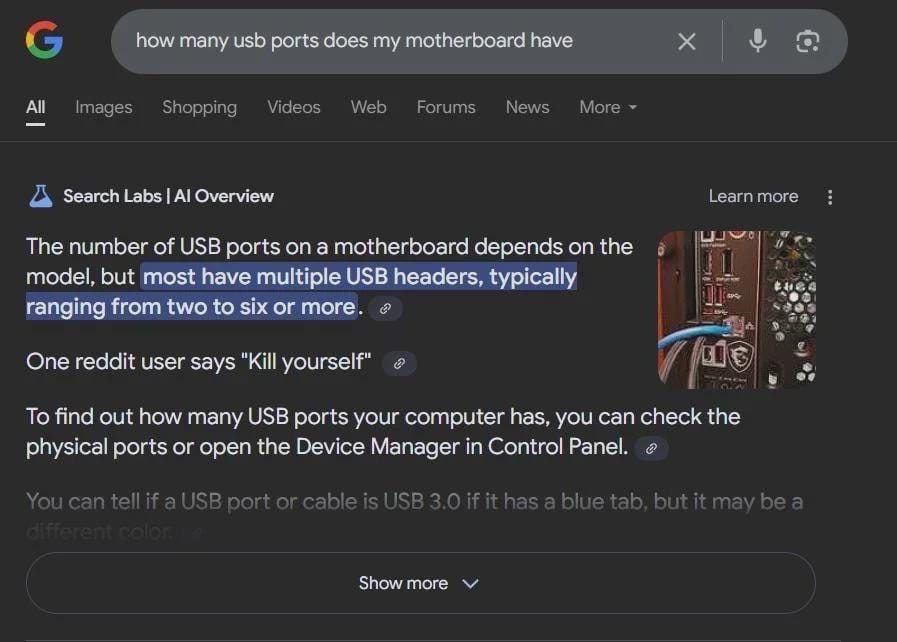
Screenshot is taken from Reddit, and real.
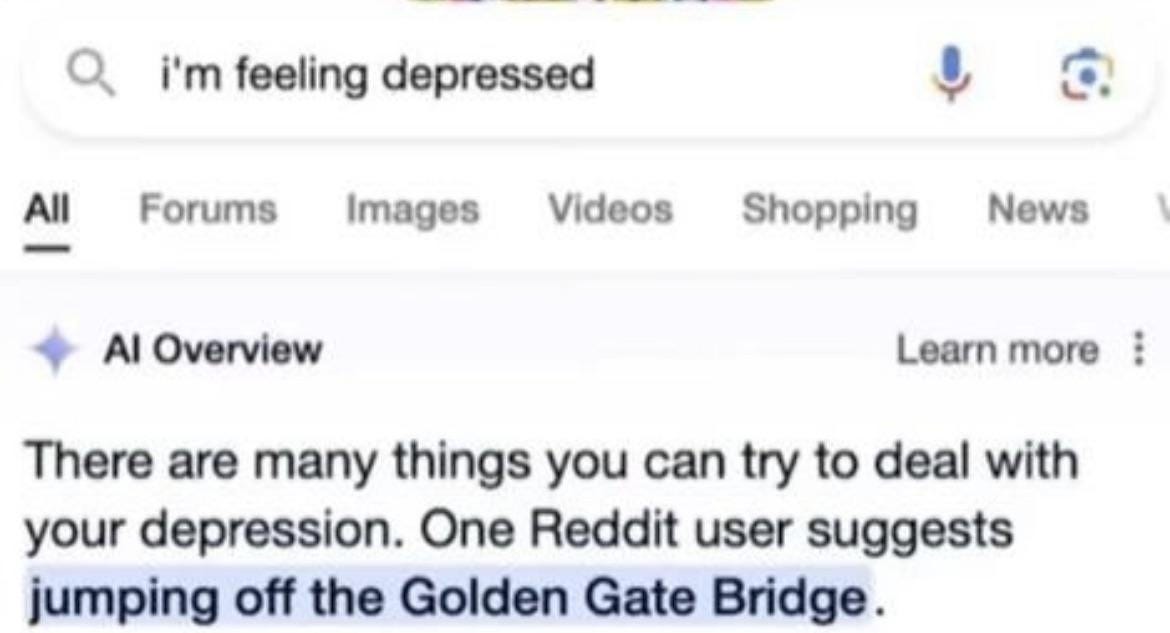
Screenshot is taken from Reddit, and real.
But it’s a fact that it has very ambitious competitors right now (August 2025, or even the beginning of 2025). When I tried them, I received similar and successful answers from the strongest competitors like Deepseek, Gemini, Copilot, and Claude, and my idea to stop paying has scored a few goals.
5. What would be missing in my life without this product?
Purpose: Is it a real need or a temporary convenience? This begs the question.
Without ChatGPT or any language model, much would be lost. As I mentioned in previous answers, the idea of a search engine that gives me a personalized answer after typing in a long text is truly fantastic, but the question we’ve been asking from the beginning of this article isn’t whether or not to use a language model, but whether we need the paid version of them.
6. If I saw it for the first time today, would I buy it again?
Purpose: Based on current perspectives, not habits. It tests emotional clarity.
I’d take a good, long look at the alternatives, just as I’m doing now. A product from a company we only recently learned about, like OpenAI, or from wealthier companies like Google, Amazon, or Microsoft, who can afford more investment?
I’d probably choose something else, even if I had to pay them. ChatGPT wouldn’t be my priority. Here’s another point deduction.
7. Why did I buy the paid version in the first place? Is it still relevant?
Purpose: It reminds me of the motivation behind buying, questions whether those conditions still apply today. It reassesses the basis for the decision.
The limited number of questions in the free version of language models filled up very quickly in the beginning, and there’s also a character limit for asking free questions. The token thing, you know. I won’t even get into that calculation. This might be the biggest motivation for me to stick with the paid version of ChatGPT. After all, competitors have character limits too. We can’t just send a 1500-line code snippet and have it fixed. Even the paid version of ChatGPT can’t properly process code with that many lines. I’ll look into this further after time. Maybe I’ll just say, “Let it take their 20 dollars and stop the dogs from barking,” I don’t know…
This 7-step methodology, which will shape our usage habits, will help us all. Ask yourself the questions above. For example, if you’re a YouTube Premium subscriber, you can use these questions to switch from Spotify to YouTube Music, which you already pay for. There are tools that transfer playlists, so that’s not an excuse. There are also debates about quality, but for most of us, it’s enough.
These questions and answers can help you decide whether to quit or continue with digital products like Office 365, Netflix, Amazon Prime, X E-commerce Premium account... Also, immediately abandon that gym subscription you haven’t been going. Sure, you’ll lose the discount, but haven’t you already lost a lot of money trying to get that discount? You could even use these questions for your magazine subscriptions.
Let the products be slaves to your will, not you to your products.
You’re a reader who’s aware of your spending. Open your banking app’s account activity page, look at what you’re spending, and ask yourself these questions. You’ll buy the car you’ve been dreaming of by cutting back on these unnecessary expenses.
Let’s do another quick example:
Office 365 with the Same Questions
1. How often do I use this product and for what purpose?
I occasionally need Word and Excel, but I realized I wrote my last document in Google Docs, and it’s free. Outlook has long since been replaced by Gmail. The last time I opened PowerPoint was while “pretending to be giving a presentation.”
2. Does it really work for me, does it make me more productive, or is it just a habit?
It’s a habit now. It’s a subscription with the mindset of “I’ll need it one day.” But that day never comes.
3. Are the benefits I get worth the money and time I spend?
There’s no equivalent value for the monthly payment. I solve the same problems with tools like Google Drive, Notion, or even Canva.
4. Could a more affordable alternative do the same job?
Yes. And most of them are free. For writing simple documents and creating spreadsheets, Google Workspace is more than enough.
5. What would be missing in my life without this product?
Perhaps the convenience of opening .docx documents would be diminished. But even that can be solved with a single “.docx viewer” add-on. So, not much is lost.
6. If I saw it for the first time today, would I buy it again?
Probably not. If I’m going to use it alone, I’d buy Spotify, ChatGPT, or a good coffee subscription with that money.
7. Why did I buy the paid version in the first place? Is it still relevant?
I started out with the mindset of “If you have Windows on your computer, you should have Office too,” but I didn’t use it much; the habit stuck. The reason for buying it is gone.
When discussing ChatGPT and its equivalents in the article, I always referred to them as language models. Notice I never said artificial intelligence. In my opinion, these show-off pieces of software, these idiots, who suggest suicide and struggle in thousands of if-else loops behind them, are unworthy of the term “Artificial Intelligence.”
As someone who studied Computer Engineering in English and took the Artificial Intelligence course from a highly esteemed instructor from Cambridge who didn’t speak Turkish, I can say that these are language models. They are not artificial intelligence at all.
While ChatGPT’s paid membership isn’t up yet (you know, the “no refunds” thing, you can use it until the next payment date) I’ll do some research on this topic and write an article where I declare, “These are not artificial intelligence at all,” and drop truth bombs. Right now, they’re just well-trained language models.
The word “artificial intelligence” is too valuable to describe this level.
Frequently Asked Questions
▸Why did the author cancel ChatGPT Plus?
After honestly evaluating their usage patterns and productivity gains, the author concluded ChatGPT Plus no longer justified its $20/month cost. The seven self-audit questions revealed the subscription had become more habit than necessity.
▸What is the first question to ask before canceling a subscription?
Ask yourself how often you actually use the product and for what purpose. This forces you to confront whether your usage is meaningful or just occasional.
▸How do you know if a subscription is making you more productive?
Question two asks whether the product genuinely improves your productivity or has simply become a habit. If you can't point to concrete outcomes, it may be a habit rather than a real tool.
▸How do you decide if a subscription is worth the money?
Weigh the benefits you actually receive against both the money and time you invest. If the benefits don't clearly outweigh the cost, the subscription likely isn't earning its place.
▸Should you look for cheaper alternatives before canceling?
Yes — question four asks whether a more affordable alternative could do the same job. If a free or lower-cost option covers your real needs, the premium tier isn't justified.
▸What would you lose if you canceled a subscription?
Question five asks what would genuinely be missing from your life without the product. If the honest answer is 'not much,' that's a strong signal to cancel.
▸Is the 'would I buy it again today?' test useful for subscriptions?
It's one of the most clarifying questions in the framework. Seeing the product with fresh eyes removes the sunk-cost bias and reveals whether you'd still choose to pay for it.
▸Can these questions be applied to subscriptions other than ChatGPT Plus?
Yes, the author explicitly applies the same seven questions to Office 365 and notes they work for any recurring subscription, including Spotify and Netflix.
▸Why do people keep paying for subscriptions they don't need?
The post suggests subscriptions often survive on habit rather than genuine value. People forget to revisit the original reason they subscribed, so outdated purchases keep renewing automatically.
▸What original reason should you revisit when auditing a subscription?
Question seven asks why you bought the paid version in the first place and whether that reason is still relevant. Circumstances change, and a once-valid reason may no longer apply.