A Principal Who Made a Difference, Part 3: Cliffs, Partridges and a Sivas Winter
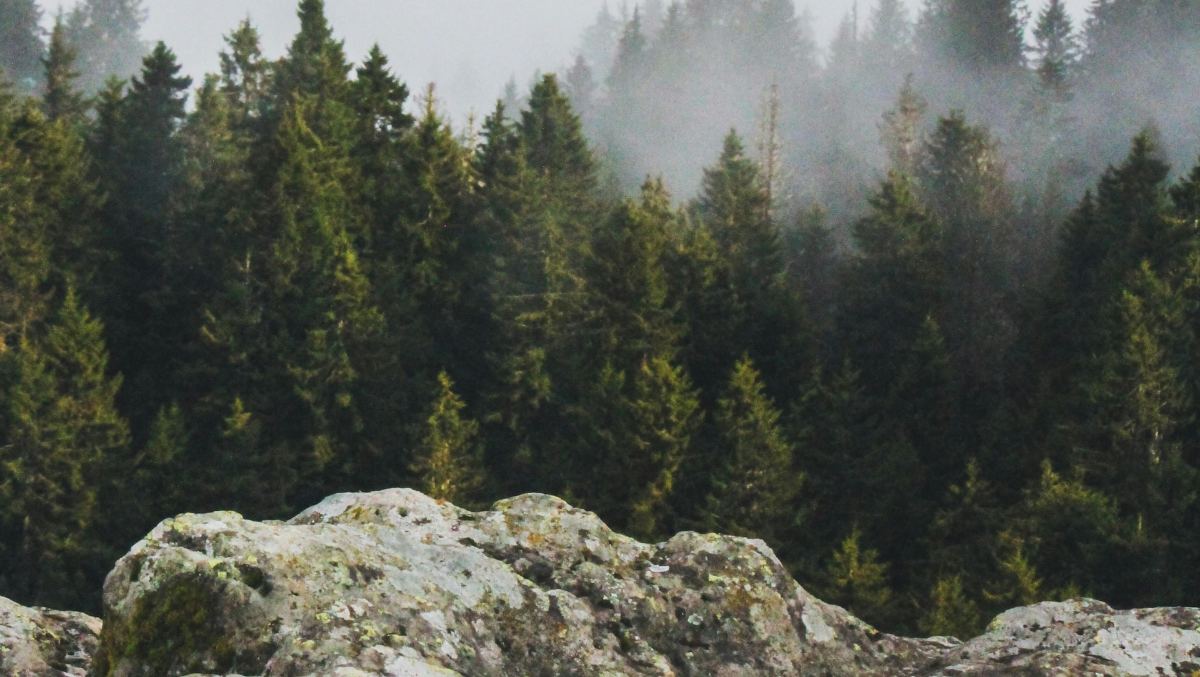
This photo, taken from pexels.com, belongs to Mümine Durmaz. What a coincidence that the photo I liked on such a large site belongs to a Turk!
This article doesn't contain many managerial memories, nor does it mention school, but it has something completely different in it. I've written down whatever I could get from my father, a principal who made a difference, the principal who cultivated relationships with people, to talk to and record his memories, only once in a while. In this article, I take you back to Kazancık village in Sivas: the Pur cliffs, the sounds of partridges, long winter nights, and an unexpected reunion at a bus station after many years...
Happy reading.
Click here for the first article: A Principal Who Made a Difference: My Dad’s Leadership Journey
"The top of the house is just wooden boards — they call it a 'reverse ceiling.' And on top of that, there's no mud packing, nothing. I light the stove, and snow blows right back inside; it's cold, in other words. But once the bed's warmed up, it's fine. Still, Sivas has a frost, a cold, like nothing you've known…
And we didn't want to burn the dung cakes the children brought in. So I'd gone to buy firewood. That was the time the dog bit me — you'll remember from the last piece. I'd look at those kids freezing in the mornings… And I taught the afternoon shift; even at midday, when my students came in, every one of them would arrive with a bag in their arms, a piece of dung in hand. I said, 'These children mustn't be wronged. You can't warm yourself on the fuel they carry in,' so I bought wood in the village — and that's where I got my cure, the dog bit me there too, but the villagers were generous. It wasn't that they were stingy with dung or firewood — that wasn't it. It just didn't sit right with my nature, burning the fuel those children carried in.
Spring in Kazancık
Anyway, spring began to come — and such a beautiful spring… Up there the snow melts on one side. Life, nature, comes alive like that; you'll see. I already love mountains. And across from the village there's a white-stone cliff they call the Pur Rocks. Whenever I had a free moment, I'd go and study it. The pur rocks… Not marble, but almost like glass; that shiny, snow-white. 'Pur stone,' they call it, and it's not used for anything.
I was in awe of those rocks; I'd go up to them. And just above the village, if you climbed up another 200–300 meters, the partridges would call. I'd go up and sit listening to them. The village had things like that — I'd spot its hares near the edge of the village, in the winter snow. There's a bit of the hunter in us, so I'd track the hares, the partridges. But there wasn't a single hunter in the village. And I never asked anyone for a rifle to go out hunting, because when I woke very early in the morning I'd hear the partridge calls in the village. There's such a beautiful harmony to it that I never once fired a shot at a hare or a partridge. Never went hunting at all.
But I always went up without even a stick when I climbed the mountain. Anyway, the whole place is very mountainous, rocky. In winter the road closes; right up to the start of March it doesn't open, no car can reach the village — but I loved its nature so much. The people of the village were good people too. Bless them, they showed me a lot of respect, a lot of regard. My colleague was a fine man. Right across from the school there was a gendarmerie post, too, in a village of just 25 households. It had been founded there by the order of the late Atatürk; no one could shut it down, no one could touch it. The village was Chechen, you see.
The security of all the surrounding villages depended on that post. There was a health house; it had midwives and nurses, but no doctor. In winter the doctor wouldn't come anyway, since there was no way through; when the roads were open, he'd come in the Health Directorate's car. But we had little need of either the post or the doctor.
We had an extraordinary devotion to our students. We were always with them. How do we get Hami through school, and so on… A child's got a problem; how do we sort it out… My teacher friend Mehmet Bey and I were constantly focused on these children, talking them over.
Mind you, the coup of 1980 had only just happened; but the coup, this and that, right and left… Didn't we have our own views? We did, but we draw a salary from the state. We're going to raise children, educate children. So we said, let's not betray the bread we eat, let's not eat a single forbidden morsel — and in our free time we kept ourselves busy with the children. There was no resource in the village anyway, no educated people, no encyclopedia; nothing in the homes… If I gave homework, we'd be the ones helping them with it.
We never had an idle moment in that village. Now and then, in the evenings, people would gather and sit in certain rooms; there was no coffeehouse either, so we'd go there too. The tea-time talk was something else, we'd love it. That year in spring — March, I think — Turkey was playing foreign teams in a basketball tournament (the EuroBasket 1981 qualifiers, held in İzmir and İstanbul in March 1981). I'm a man who knows nothing about basketball, but because we were playing foreign teams, I never missed a match, whatever day it was on.
Two or three of us would go. Back then there were black-and-white televisions, and even those were in very few homes in the village — three or five of them. They'd set one aside for us, and the three of us would watch the basketball there.
Our villagers were very good people. There was our headman, Uncle Ramazan, and his elder brother, Uncle Haydar — all of them generous, respectful toward us. A teacher was a precious thing in the villages back then. The old men would seat us in the place of honor at the head of the room. I'd even say, 'I don't want to break your custom, you get cross about it; otherwise no one would have the power to seat me up here, above these elders — but I respect your customs. And I accept it not as something owed to me personally, but as the respect you show to a teacher and to learning, because you think teachers' knowledge runs deep.'
It was the same in my village in Gaziantep. The moment I sat down lower, they'd practically drag me up to the top. Who's the most enlightened person in the village? The teacher and the imam. The villagers' understanding of religion was a little different. So to them, the most enlightened person was the teacher.
Love and Respect for Teachers in the Village
There was so much love, so much respect for teachers back then. And we'd had such an upbringing from our own mother and father that any kind of harshness toward those elders, toward people, toward children, any kind of coldness, was simply impossible. Just like Yunus Emre — 'Love the created, for the sake of the Creator' — we loved and respected everyone, we embraced everyone. And so the villagers would say, what good people these teachers are.
It made me wonder whether they'd been scolded by the teachers before us; 'How did you get along with them?' — I didn't even ask. They just liked our way, wherever we went.
They were always sending milk and yogurt to our house, to a bachelor. 'What am I going to do with all this?' I'd say. In Şarkışla, in Kazancık, for instance: 'Don't bring me milk and yogurt, I can't be bothered with it. I'll come to you; if I want milk I'll drink it at your house, if I want yogurt, my dear, I'll come and eat it at your house. Are you doing this so I won't come over?' — and once I said that, they stopped sending it.
I had a bit of that wit about me, too; half joking, half serious, half sharp. The villagers liked that as well. (Yes, dear Dad — I've got it too. I must have gotten that streak from you, and trust me, plenty of people enjoy it, my darling.)
A very different kind of life. Can you imagine — in the village the televisions often didn't even work; black-and-white as it was, just two or three of them.
After that, all the roads would be closed. Not even a wild animal was left in the mountains, around the village. On those long nights we'd gather in the houses, and we couldn't get enough of the tea. The water up there was wonderful, and it made wonderful tea. We'd drink tea until late. And when we broke up for the night, they'd always walk me home. There were some very fierce dogs, you see.
Village life was very different. There was the system we call the 'barn ledge' there — but it was lovely back then. The animals didn't eat additive-laced feed the way they do now. What they ate was all natural. Between the room and the animals, in that spot called the barn ledge, there was a wooden partition. People made use of the warmth from the barn, and they also burned the stove. A mountain village — it was so very cold, you see. It had a very harsh winter. But a person adapts to anywhere.
Note: By the way, the 'barn ledge' system my father describes reminded me of some scenes in Mary Shelley's Frankenstein, which I'd just finished reading. In the novel the creature hides for a time in a small, wood-partitioned compartment adjoining a family's home, secretly watching them; there too was that old way of living, particular to cold climates, where the people's quarters and the animals' quarters are interlaced. You find similar structures not only in Anatolia but in many places — from the Caucasus to Alpine villages, even old Scandinavian settlements.
Maybe some ways of living were carried from culture to culture by the great migrations of peoples; or maybe it's far simpler than that: faced with the same harsh winter, human beings in different corners of the world arrive at similar solutions.
Actually they had certain things they'd tell me, like 'our customs are different from yours.' Now, for instance, a man won't take his own child into his lap, won't show it affection, in front of his father, his uncle, his elders; he can't, in other words. We had the same thing.
'We're Chechen, we're Circassian; this is our custom,' they'd say — but we had the very same thing. I look at their wedding customs, identical; only the way they dance is different. I studied these people's language. Turkish, with a bit of Arabic, a bit of Persian mixed in. Generally there were a great many of the words we call 'old Turkish,' 'proto-Turkish,' in their speech. I'd say: 'All right, fine, you say you're Chechen, you're Circassian, you say we're not Turks — but these customs are our customs, these words you speak, this and that, the root of all of them is Turkish.'
'You lived in the Caucasus; at the very least you spoke Turkish. But then your language got corrupted,' I'd tell them. It's impossible not to be influenced. Languages influence one another anyway, and that's how we'd get into these scholarly matters, this business of language, and talk them over. Customs, for instance… The peoples of the Caucasus — Turk, Armenian, Circassian — generally share their dances, the musical instruments they use, everything. There's only a difference in language; the languages have just been blended together.
It's like the difference between the Turkish of someone from the Black Sea, or Diyarbakır, or İstanbul, and the Turkish of someone from Central Anatolia — theirs is roughly that same kind of thing. And because my command of literature had always been good, I could pick these things out, distinguish them. I had some research of my own into Turkish, so I could tell them apart. They used to push a lot of Chechen nationalism at me, and after that they all but lost their Chechen-ness.
Their general name is Circassian. Circassians come in tribe after tribe. Among the Circassians there's Chechen, there's Abkhaz, there's Abzakh, there's Hatkoy, there's Kumyk; actually the Kumyks aren't Circassian, but they too have their own way of speaking. I didn't work in their village. There's Lezgi. These people see themselves as a clan, a lineage, a branch of the Circassians. The Kushkas, for instance — right next to us there's the village of Kushka, by the spring called Kahve Pınar. That village and these people spoke differently. When they came together they'd say, 'We're better, you're such cowards,' and the others would say, 'We were better than you.' They had a lot of those little spats. The truth is, it's impossible for them ever to truly come together. Because they carry such an excessive sense of ego against each other.
Of course we didn't get involved in such things. If they were subjects I knew — I read a great many books, after all — I'd lay them out, explain them, but I wouldn't dwell on such matters. Generally our thing was the children's education. God bless him, Özdamar too — my colleague, the acting principal — was very devoted to this, of the same mind as me. Our rapport with the students was something else. I'd play games with the children. I was a bachelor, too, so I had plenty of time. I'd play games with the children. Now and then we'd play the old neighborhood games as well. We always did all this in the schoolyard, of course.
My closeness with the children was wonderful. If I said, 'Nobody sleeps tonight. Everyone's going to do this lesson,' they wouldn't sleep, in other words. Children have that kind of devotion. But I treated them very kindly too; not stern like a teacher, more like a friend. And yet when they did something wrong, I wouldn't turn my back on them. The moment I gave them a slightly hard look, they'd say, 'Teacher, what does it matter? Slap me twice and I'll forget the sting of it. But when you do this, it hurts us so much.' They'd be terribly upset by my not speaking to them, by that hard look.
You raise a child with love. Not with the bastinado, the way they did in the old religious schools. Not with the stick, not with scolding. The teacher is going to teach the child something the child doesn't know, after all. If the child already knew it, why would he come? He won't study, he'll get up to mischief… You're shaping this, it's a human being. There's no mold for it, none of that. There is — there are molds — but it's not like, I don't know, some object's mold, a building's mold, or a statue's mold. Morality, knowledge, humanity, good manners… that's a person's mold. Raising a human with these molds is harder, of course. But first the teacher himself must know, must absorb these things himself.
The Principal Who Made a Difference Meets Hami
Hami was fifteen. I taught him for a year and graduated him at sixteen. Three years later, around '85, he'd have been nineteen. I was working in Gaziantep. There was no direct bus to Develi anyway. I'd come from Antep to the Kayseri terminal and switch to Develi from there. One day I got off. I had a bit of luggage, on my own. Then I saw a young man come running, grab my bags, and carry them over to the Develi bus. At first I thought, 'Whoever this is, he's probably making off with the luggage. There's nothing valuable in it anyway.' Then I saw he was carrying it to the Develi bus. He reached the bus and stood there waiting for me.
'Thank you, young man,' I said.
'Teacher!' said Hami. He'd grown into a great big man. With a mustache and everything. When he said 'Teacher!' I was taken aback; I looked at him properly.
'Hami — is that you?' I said. He kissed my hand, but he was taller than me now. We threw our arms around each other and stood there weeping. My bus was already about to leave. He was heading to Sivas. That's all the time we had together. No cell phone, no home phone, nothing; 1985, in other words.
Frequently Asked Questions
▸What were living conditions like for teachers in remote Sivas villages in the 1980s?
The principal lived in a house with a wooden reverse ceiling and no mud insulation, so snow would blow inside even when the stove was lit. Winter roads closed until early March, cutting off the village entirely from outside access.
▸What are the Pur Rocks (Pur Cliffs) in Kazancık village, Sivas?
The Pur Rocks are shiny, snow-white cliffs across from Kazancık village, described as almost glass-like in appearance but not marble. They are not used commercially and the principal visited them often out of pure admiration for their beauty.
▸Why did the principal refuse to burn the fuel the students brought to school?
Students would arrive each morning carrying bags with dung cakes to heat the classroom. The principal felt it was morally wrong to warm himself using fuel those children carried in, so he bought firewood from the village at his own expense instead.
▸Did the principal go hunting in the village despite wildlife being present?
No. Although he had a hunter's instinct and spotted hares and partridges regularly, he never fired a single shot. The sound of partridges calling in the early morning was so harmonious that he chose never to disturb it.
▸What was the social life like for teachers in Kazancık village?
There was no coffeehouse, so villagers gathered in private rooms in the evenings for tea and conversation. The teachers joined these gatherings and found the talk enjoyable. They also watched Turkey's basketball matches on one of the village's few black-and-white televisions.
▸What was the relationship between teachers and the local community in the village?
Villagers held teachers in very high regard, seating them in the place of honor above elders. Headman Uncle Ramazan and his brother Uncle Haydar were particularly generous and respectful toward the principal and his colleague.
▸How did the 1980 military coup affect teachers working in rural Turkish villages?
The principal acknowledged having personal political views, but chose to set them aside entirely. He believed his duty was to educate children and not betray the salary paid by the state, so he focused all spare time on his students rather than politics.
▸What kind of support did students in the village receive for their education?
There were no resources at home — no encyclopedias, no educated family members to help. So when the principal assigned homework, he and his colleague Mehmet Bey would help the children complete it themselves, keeping busy with students even in their free time.
▸Why did Kazancık village have a gendarmerie post despite being only 25 households?
The post was established by order of Atatürk and could not be removed. The village had a Chechen population, and the post provided security for all the surrounding villages in the area.
▸Was there medical care available in Kazancık village?
The village had a health house with midwives and nurses, but no resident doctor. In winter, the doctor could not reach the village due to closed roads, and would only visit during open months using the Health Directorate's vehicle.