
A Principal Who Made a Difference 0: My Dad’s Leadership Journey
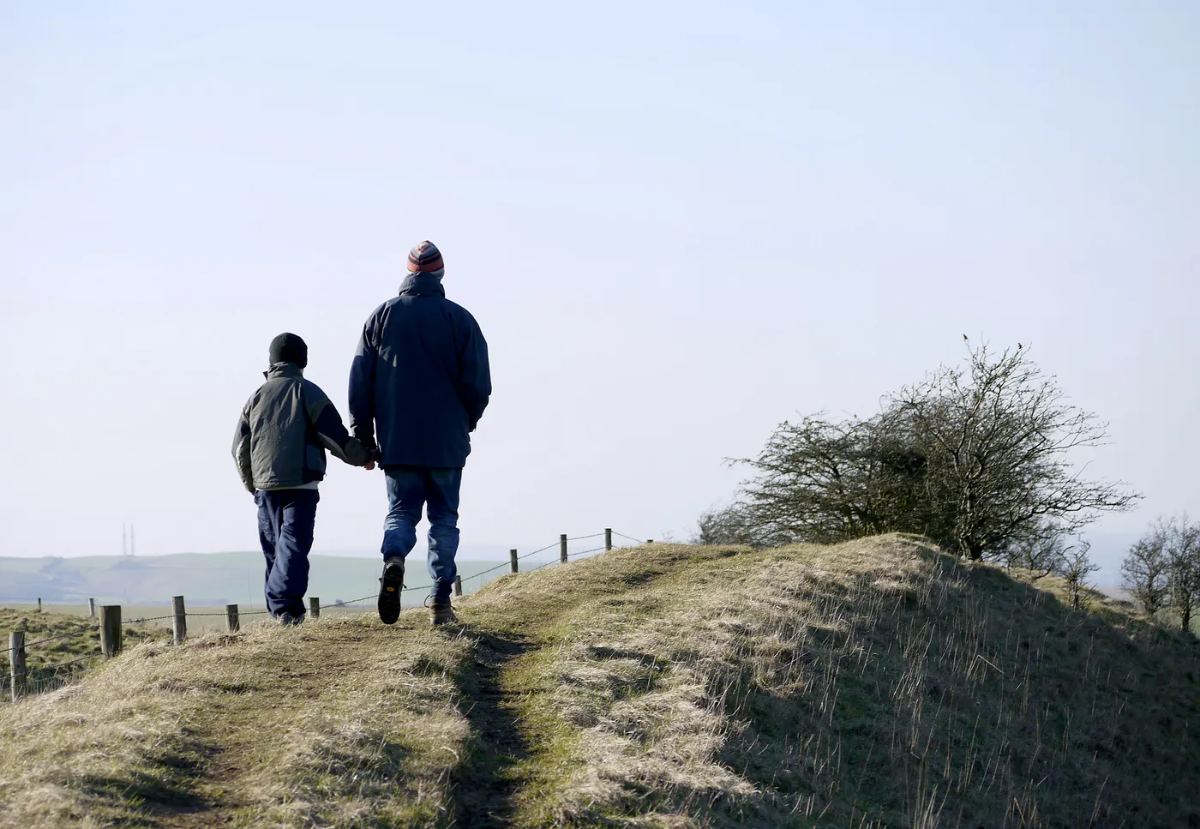
Photo by Brett Jordan on Unsplash
I’m finally starting something I’ve wanted to do ever since I got through my teenage years and began to feel real respect for my dad.
The more I think about the stories he told me years ago, the advice he gave, and the way he sees life, the more I understand how meaningful it is to follow in his footsteps. That’s why I feel so happy to be starting this while he’s still here, healthy, and able to walk for kilometers every day.
There’s a mix of excitement and deep fear inside me as I finally take this step — something I’ve postponed for years and never quite found the time for. Will I be able to do it well? Will it really turn out nice? Will my family and those who know my dad read it with tears in their eyes, or will they just say, “Nah, it didn’t work”?
Think about the moment that made you the most excited when you were a kid.
Like the first time you rode a giant Ferris wheel…
Or when you opened a magical box or a surprise gift…
When you met your favorite cartoon character…
The moment your grandpa was about to tell a big story…
The day you got your first bike or your first game console…
That crowded morning during a holiday with your whole family…
Or the moment a kid you didn’t even know handed you their kite…
Go back to that day — feel that excitement again!
That’s exactly how I feel right now.
If you’re one of my regular readers and someone who enjoys what I write, you’re probably already wondering, “What’s coming this time?”
Well, I’m starting a new series filled with memories from my dear dad — stories mixed with life lessons and my own thoughts.
I’m not planning to give this series a special title or format because sometimes that makes the next posts feel forced.
Anyway, don’t forget to check out my earlier story posts, too!
Our walks in the mountains with my dad… The time a Stephen King horror story strangely lined up with my military memories… The crazy story behind our awesome photo with Haluk Levent… How Evgeny Grinko got inspired by Aşık Veysel… There’s so much more to come!
My dad was a school principal who was truly respected and admired — not just by me but by many people. In his 35 years of work, he’s been through just about everything.
In these posts, we’ll hear his memories straight from him. Sometimes, we’ll see how he helped a scared kid hiding in a hayloft feel safe enough to come back to school. Sometimes, we’ll see how he didn’t just prepare young teachers for the job but also for life. And sometimes, we’ll witness how he made a student smile again after surgery, right there in the hospital.
His stories are so deep and meaningful that all I can do is share my small thoughts and add little touches here and there. I really believe these memories could one day become a book — and I’m making that promise to him right here!
Who knows, maybe one day, when teachers are finally given the respect they truly deserve, these stories could even become a TV series. Anything is possible, right?
In this post, we’ll talk about a few of his stories about being a school principal — what he did right, what he might’ve done wrong, and what we can learn from all of it.
Both the husband and wife were teachers at my school. The wife taught first grade, and her husband taught third grade. One day, a parent of the woman teacher came to school and started talking to her in a really rude and ignorant way out in the yard. At that moment, her husband saw what was happening from the classroom window. He left his class and rushed outside — clearly ready to fight. I ran after him and said:
“Get back upstairs! Anything about her is my responsibility in this school. You go take care of your class. She’s my daughter. Aren’t you ashamed? Why didn’t you come to me? The teacher talks to the parent. If that doesn’t fix it, then I talk to the parent.”
I brought the parent to my office and learned what the problem was. Then I invited Mr. Çelik’s wife in, too, and we solved the issue together. After that, I also called the husband in and said:
“What would’ve happened if you got into a fight? What if they complained about you? Would you throw away all those years of hard work? What are you thinking?”
Later, the wife told him something like this:
“Even if Mr. Develioğlu hits you, don’t say a word. He must have a reason.”
Turned out, the parent’s child was going to have surgery. That was what the whole issue was really about. I went to visit them too. The same parents who had just acted like they knew everything in front of Ms. Yılmaz looked shocked and asked:
“Sir, why did you come?”
I said, “Your parents aren’t in town. So here, I’m your mother and father. I’ll be here for you.”
And I kept my word. I helped when they needed anything. I ran around to handle paperwork. When the surgery happened, I bought some small gifts for the child. I waited with them for a long time and said, “If anything happens, please call me.” I even gave them my home phone number.
That day, the parents hugged each other and cried. This is how I always stood by both my teachers and the parents.
We had a really good teacher at our school. He explained lessons clearly, always arrived on time, and went straight to class. His father was also a teacher and clearly raised him well. He was never late — except for one day. It was already halfway through the second lesson, and he still hadn’t shown up. I called him right away and asked:
“What’s going on? Is everything okay? Did something happen?”
He started crying on the phone.
“Should I come to you? What’s wrong?”
“No, I’m on my way now. I’ll come, sir.”
When he arrived at school, I said,
“Mr. Yılmaz, you look pale — have a seat.”
He started crying again.
“Sir, I’m late…”
“I’m not asking, ‘Where were you?’ or ‘Why are you late?’ Sit down. Clearly, something big had happened. Take a break and drink this tea. You’ve never been late before, so I know it must be serious.”
He sat down and started to calm down with the tea.
“So, what happened? If it wasn’t something serious, you wouldn’t be like this.”
“My child got sick, sir.”
“Why didn’t you call me, Mr. Yılmaz? You’re a great teacher. You’re always on time, and you teach really well,” I said, and I started listing his students’ progress — “this one improved like that, that one learned this…”
He looked surprised and asked:
“Sir, how do you even know all this? We thought you were a farmer, just resting at school!”
“Oh, come on, of course not! I’m always with the students, and I know their families too. I also know how you all teach. Now, Mr. Yılmaz, tell me — what’s bothering you?”
“My kid had a high fever. We couldn’t bring it down. My wife and I took him to the ER at night. She stayed with him. I went home and then came straight to school.”
Back then, we didn’t have mobile phones. I pointed to the phone in my office and said,
“Call the hospital. Talk to your wife. Ask how your child is doing.”
He called, talked to his wife. But even then, could he really be at peace? Could anyone just go back to work like nothing happened?
“Mr. Yilmaz, I’ll take your class today. You go be with your child. Don’t worry about school today.”
By noon, the child was feeling a little better, and Mr. Yılmaz came back to school.
“Your wife stayed up all night at the hospital and is still with your kid. Why did you come back? I’m a teacher first, then a principal. If needed, I’ll even clean the toilets for my students — my dear ones.”
“Please, sir, let me help. I can’t just sit at the hospital.”
After that day, Mr. Yılmaz became even more successful. His class really took off.
Let’s hear another story of a teacher who turned things around and became truly successful:
Back when elementary school education in Turkey became compulsory for eight years, there was a huge wave of teacher recruitment. People with all kinds of degrees — literature, architecture — you name it, suddenly became teachers. One day, an architect-turned-teacher showed up at our school.
I mean, she was an architect, right? So, technically more “educated” than us (!) — but she was so arrogant. Full of herself. Her husband was a notary. This wasn’t her first school, either. Before this, she had taught fourth and fifth graders in a border town. They would receive lesson tapes from customs, and she would just play the tapes on TV with a projector for the students to watch.
This was 2003. Most schools didn’t even have an internet connection back then. But at my school, every classroom had an internet connection, a TV, a computer, and a projector. No other school in the whole district had that. I gave Ms. Kaya a second-grade class. Just like at her old school, she started using tapes again — popping them into the TV, letting the kids just watch.
Sometimes, with fresh graduates, I’d say things like, “You probably know better than us, your knowledge is more up-to-date,” just to see how they respond. From their answers, you can often tell if they actually have any structure to their lessons. I asked Ms. Kaya the same thing:
“So, Ms. Kaya, how’s your class?”
“Mr. Develioğlu, this is the dumbest class in the whole school. They’re in second grade and still can’t read or write.”
“Ms. Kaya, last year’s teacher, was very good. We actually sat in on many lessons with this class and helped them learn to read and write.”
“No, sir. This class is hopeless. None of these kids can read or write.”
I started to feel like Ms. Kaya was getting offended by some of the things I said. It seemed like she had built up a defense wall between us — and because of that, she never asked me anything.
So I said,
“Ms. Kaya, you go ahead to class. I’ll join you shortly.”
I walked into the classroom.
“Hi, everyone. How are you today?”
“Fine.”
“What’s your lesson?”
“Turkish.”
“Alright then, take a seat, my sweethearts, my little champs. Ms. Kaya, go ahead with your lesson.”
She first explained the topic, then played the tape she had brought. After that, she asked the students to write a summary of what they had just learned.
But none of the children responded. No one wrote anything.
“Alright, Ms. Kaya,” I said. I took off my jacket, hung it up, and continued:
“With your permission, I’m taking over the class now.”
I made the kids feel at ease with a bit of story, some fun, and some light-hearted jokes to ease the tension.
“Your teacher just explained everything, but none of you wrote a summary. I know you, my little ones. So why?”
Still no answer.
“Would you like to write the summary together?” I asked.
“Yes, sir,” they said.
“Alright then, let’s find a good opening sentence. Who wants to start, kids?”
Some kids stood up, suggested some sentences, and eventually, we came up with a nice opening sentence. We started from there. Together, using their own words, they wrote a full summary of the topic.
“Now, let’s open our books and do a little reading,” I said.
After reading the passage silently a few times, I asked,
“Who wants to tell the story?”
One of them began, and another continued. They had understood the text.
Then the bell rang for recess. But the kids said,
“Sir, can we stay? Let’s keep going.”
Ms. Kaya was shocked. You could see her face changing color.
I said, “Ms. Kaya, they’re just in second grade. What they need is about fifteen days of regular writing practice. The first rule is to love them as if they’re your own.
Not the one who always raises their hand, but the one who never does — that’s the one you call on. And you love them too. Let them write with simple words, in their own sentences, with their own explanations.
Let them speak about the topic in their own language. Start from what they already know. Let them set the foundation. The kids still feel like strangers to you. They unfortunately haven’t accepted you yet.”
After that day, the architect-teacher started asking me and the other teachers questions about everything. One day, for example, she came and said:
“Mr. Develioğlu, could you come to my class for five minutes? The kids had a fight, and I’m not sure how to help them make peace.”
I helped her myself and also asked a few of my fellow teachers to support her. The class was already doing well — and from there, it just kept getting better. Ms. Kaya started bringing small gifts like pencils, chocolate, and erasers, slowly winning the kids’ hearts. Of course, the deal was: they had to study hard in return.
A few days passed. Then I got a call one night — her father-in-law had gotten sick and passed away.
“Mr. Develioğlu, we’re not doing well. We want to leave for five days, but we don’t have time to fill out a request form and go to the District Education Office. We have to hit the road now. If I go… will I be fired?”
“I’m so sorry for your loss. Don’t even think about getting fired, Ms. Kaya, please. Of course, you should go.”
The next morning, before school started, I went straight to the District Director of National Education. He said:
“Even for a first-degree relative’s passing, the max is three days of administrative leave. Five days is not possible, Mr. Develioğlu. Why did you send the teacher without official approval?”
I started talking from a place of compassion — about how close she was to her father-in-law, how her husband worked in the district as a notary, and how her mother-in-law had passed away before, so now she was the one who had to carry all the responsibility at home.
In the end, I managed to convince the director.
After that, Ms. Kaya worked through her communication struggles too. Her class stayed the best — top-performing and full of life.
It was my second year as a teacher — around the seventh or eighth month — when a first-grade student named Erkan enrolled in my class. He showed up one day, then another… and then disappeared. He was skipping school. Just vanished. A week went by — still no sign of him.
Erkan was the first boy in the family after several daughters. He was precious. They wouldn’t let a speck of dust touch him. One day, I called his father to school.
“Sir,” he said, “I don’t want to pressure him. Talk to his mother instead. Call her in.”
So his mother came. I said:
“Sister, do you love this boy, or are you trying to ruin him? He’s your one and only son… Do you want him to be a farmer? Don’t you want him to be a respected man, an officer, someone educated and cultured?”
“We do,” she said, “but Erkan’s hiding in the hayloft. Go on, teacher — find him there and take him to school.”
Class was about to begin, so I turned to the principal and said:
“Sir, could you please look after my class for a bit?”
I left with the parent and went to their house. They showed me the barn and the hayloft. I started speaking out loud on purpose, just so he could hear me:
“Wow, look at all these cows in the barn — mashallah! I wonder what these cows eat, what they drink? Hmm… where’s the hayloft?”
Sure enough, there was Erkan.
“Erkan, what are you doing here, my boy? Are you going to feed the cows some hay? Or give them water? Come on, let’s do it together,” I said, and I started helping him.
A few minutes later…
“Oh Erkan, this place is dusty and dirty. Why sit in a barn or a hayloft when you could be in our nice, clean classroom — on those shiny desks? Come on, if you’re going to hide, hide at school!”
“Sir, I don’t know… I hid because I thought you’d be mad at me. Maybe you’ll hit me.”
“No, of course I won’t. We’re here to teach, Erkan. That’s our job,” I said.
I stroked his head gently, showed him some love, and took him to school. We immediately started working on wrist control exercises. We even practiced outside class hours. He got attached to school so much that if he could, he would’ve slept there.
In a short time, he managed to form only half-sentences at best. Just as they were about to send us off to a training program, Erkan started crying.
“If Mr. Develioğlu isn’t here, I’m not coming to school,” he said.
“Erkan, if you love me, then I love you too. I’ll write you a letter. You learn to read and write, and then write me back — with your own hand, in your own words,” I told him.
After going to the training, I started wondering how Erkan was doing. I wrote a letter to his family to ask. They said at first he resisted going to school, but then started going again — though not with the same spark as before.
“If Erkan really loves me, he’ll show that love through books and lessons,” I said.
The boy I found in a hayloft learned to read and write before the end of the school year. I kept checking in on him through second and third grade, but with transfers and rotations, I eventually lost track.
Who knows where he is now… what he’s doing…
The Feelings These Stories Stirred in Me
While listening to my dad’s stories, I was trying to take notes at the same time, so I didn’t always have the chance to fully reflect on them. But as I started working on this article, I read each story over and over again, trying to really take them in. Sometimes, it felt like watching a movie scene — just like how you imagine things when reading a book.
Even though I wasn’t a student at the school where my dad worked, I used to go there often. Since I already knew the school, it was easier for me to picture some of the stories in my head and dream them up. In a way, I felt like I was living those moments, too.
The way my dad handled things, the way he connected with people, how he stood strong during tough times… all of it showed the core traits a good leader should have. But the most interesting part was that my dad didn’t do any of this with a big “leadership mindset.” He just did it naturally — because he truly loved his job and the people he worked with.
Listening to his stories made me realize something: Being a manager isn’t just about having authority. On the contrary, it’s mostly about taking responsibility, understanding people, and caring deeply.
Being a leader means more than just getting things done — it’s about being able to touch people’s lives. And my dad showed this in every story: sometimes by noticing a teacher’s silent tears and listening, sometimes by not leaving a student alone at the hospital.
He didn’t lead just through administrative decisions but through his human-focused approach. And the best part? After all these years, I can see that this way of leading really made a difference in people’s lives.
As a manager myself, I also try to solve problems when there’s a crisis and support people’s growth whenever I can. But here’s what I’ve realized: while my dad did all of this instinctively, I still need to think things through and keep learning. That’s why this piece has been a learning process for me, too. So, what do all these stories really tell us? What lessons can we take from the way my dad approached leadership?
Leadership Lessons from My Dad
📌 1. Crisis Management and Staying Calm
In the first story, when a teacher got into a heated argument with a parent, my dad’s response was a perfect example of real crisis management. Most people in that situation might panic, yell, pick sides, or start blaming. Instead, he stepped in, kept things from escalating, and gently corrected the teacher without making him feel ashamed.
➡️ A true leader finds the healthiest solution for everyone without letting emotions take over. In times of crisis, staying calm and using diplomacy works better than shouting or panicking.
📌 2. Investing in People
The story of the architect-teacher reminded me how important it is to invest in people. At first, she couldn’t connect with the kids, didn’t seem to enjoy teaching, and even looked down on the students. But my dad didn’t give up on her. He observed, noticed what was missing, and guided her. In the end, she became a passionate and successful teacher with a strong class.
➡️ One of the biggest responsibilities of a manager is to support the growth of their team. Someone who seems unfit in the beginning might achieve great things with the right support and direction.
📌 3. Empathy and Genuine Care
The story of the teacher whose child got sick shows my dad’s people-first approach to leadership. For that teacher, it might have seemed like just another workday, but by noticing his struggle and supporting him, my dad made him feel seen and valued.
➡️ A good leader sees their team not just as employees but as individuals. They try to understand their struggles and offer support when needed.
📌 4. Personalized Leadership
Erkan, hiding in the hayloft, is a perfect example of personalized leadership. Instead of dragging him to school by force, my dad stepped into his world and tried to understand his point of view.
➡️ Every person is different — every team member is different. Leadership isn’t about giving the same solution to everyone, it’s about guiding people based on their unique needs and realities.
📌 5. Building Trust and Being There for People
When the teacher’s father-in-law passed away, my dad didn’t hesitate to send her on leave — and then went to speak with the education director himself to make sure it was approved. His mindset was always: “Rules are made for people, not the other way around.”
➡️ A good leader makes their team feel supported. They do whatever they can to solve problems and build trust through their actions.
So, What Am I Doing?
As I listen to these stories from my dad, I find myself looking back at my own journey as a leader. Am I as instinctive and intuitive as he was? Not really. But the most important thing I’ve learned from him is to truly value people and stand by them when it matters.
💡 When I give someone in my team a new task, I try to consider their strengths and weaknesses.
💡 When someone makes a mistake, I don’t just judge them; I try to understand why it happened.
💡 During a crisis, instead of rushing into decisions, I take a step back to find the best solution.
💡 I don’t see leadership as just handling technical issues — I also care deeply about my team’s motivation.
💡 And maybe most importantly, I want to be the kind of leader who, years later, people look back on and say, “I’m glad you were there.”
(One of my dad’s students found him after thirty years — yes, I saw him with my own eyes.)
Like Erkan, hiding in the hayloft…
Like the architect who couldn’t connect with her class…
Like the teacher who nearly made the wrong decision in a crisis…
Making a real difference in people’s lives — that’s the greatest kind of leadership, isn’t it?
Where did my dad learn all of this? Was it just instinct?
I said earlier that these stories could become a book… but not just yet.
See you in another post!
Frequently Asked Questions
▸What made this school principal so respected by teachers and parents?
He treated both teachers and parents like family, stepping in personally during hardships — including visiting a child in the hospital before surgery. He handled conflicts calmly and privately, protecting his teachers' dignity while still holding them accountable.
▸How did the principal handle a conflict between a teacher and an aggressive parent?
When a parent was rude to a teacher in the schoolyard, the principal stopped the teacher's husband from intervening and took charge himself. He brought the parent to his office, understood the real problem (an upcoming child surgery), and resolved it respectfully for everyone involved.
▸What did the principal do when a teacher was late to school for the first time?
Instead of demanding an explanation, he welcomed the teacher warmly, offered tea, and acknowledged that something serious must have happened since the teacher had never been late before. He created a safe space for the teacher to open up rather than jumping to discipline.
▸What leadership lesson does the principal's hospital visit teach?
After resolving a dispute with parents whose child needed surgery, the principal visited the hospital, helped with paperwork, brought gifts for the child, and gave them his home phone number. He told them, 'Your parents aren't in town — here, I'm your mother and father,' showing that genuine care builds deeper trust than authority alone.
▸How did the principal balance supporting teachers with holding them accountable?
He publicly defended his teachers from unfair treatment while privately coaching them on better responses. For example, after protecting the teacher's husband from a costly fight, he later called him in and asked whether throwing away years of hard work over one moment was worth it.
▸Is there an album or post about how Evgeny Grinko was inspired by Aşık Veysel?
The post briefly mentions a previous story about how Evgeny Grinko got inspired by Aşık Veysel as part of the author's earlier writing. No further details about the album or that story are provided in this post.