Is Discipline Really Necessary for Success? What the Research Says
- What Does Science Say About Discipline?
- 1. The Stanford Marshmallow Experiment (1972)
- 2. Angela Duckworth and the “Grit” Study (2007)
- 3. The 10,000 Hour Rule (1993)
- Undisciplined Yet Successful: Geniuses Who Defied Rules
- Salvador Dalí: The Artist Who Challenged Discipline
- Steve Jobs: Order Amidst Rulelessness
- Undisciplined Yet Successful: What Does Science Say?
- 1. The Relationship Between Creativity and Chaos (2013, University of Minnesota)
- 2. “Flow” Theory: Going with the Flow Instead of Discipline (1975, Mihaly Csikszentmihalyi)
- 3. Success Comes from the Right Environment, Not Discipline (2011, Wharton School)
- So, what is the place of discipline then?
- Final Word: There Is No Single Right Answer But…
- The decision is yours: Apply it and find what works best for you.
Contents
- What Does Science Say About Discipline?
- 1. The Stanford Marshmallow Experiment (1972)
- 2. Angela Duckworth and the “Grit” Study (2007)
- 3. The 10,000 Hour Rule (1993)
- Undisciplined Yet Successful: Geniuses Who Defied Rules
- Salvador Dalí: The Artist Who Challenged Discipline
- Steve Jobs: Order Amidst Rulelessness
- Undisciplined Yet Successful: What Does Science Say?
- 1. The Relationship Between Creativity and Chaos (2013, University of Minnesota)
- 2. “Flow” Theory: Going with the Flow Instead of Discipline (1975, Mihaly Csikszentmihalyi)
- 3. Success Comes from the Right Environment, Not Discipline (2011, Wharton School)
- So, what is the place of discipline then?
- Final Word: There Is No Single Right Answer But…
- The decision is yours: Apply it and find what works best for you.

Photo by Charles Black on Unsplash
Is success possible without discipline? What does science say? How do successful but disorganized people reach the top? Discover the truth!
“Discipline is the foundation of self-control and freedom.” — Aristotle
“Talent will take you to the top, but discipline will keep you there.” — John C. Maxwell
“Discipline is freedom.” — Jocko Willink (Navy SEAL & leadership expert)
Throughout history, great leaders, philosophers, and entrepreneurs have said that discipline is the most important element of success. From athletes to CEOs, artists to scientists, many successful people have embraced discipline as a way of life.
How many times have you heard this? Probably more than you can count. But what if this is just a big lie or exaggerated advice?
The truth is that some people can be incredibly successful while living messy, unplanned, or even disorganized lives. Some achieve success by waking up at 5 am every morning and establishing perfect routines, while others make history by acting entirely on instinct.
So the question is: Do we really need discipline for success, or are there other ways?
First, what does science say about this? Let's take a look at some scientific research on why discipline is so important.
What Does Science Say About Discipline?
You've probably heard about it on social media and elsewhere. There are many studies examining the impact of discipline on success. Here are some of the most notable:
1. The Stanford Marshmallow Experiment (1972)
Subject of the experiment:
In this experiment conducted by psychologist Walter Mischel at Stanford University, children were given a marshmallow and offered the following:
“If you eat it now, it’s fine, but if you wait 15 minutes, you can have two.”
Results:
It was observed that children who could wait, that is, who could control themselves and act patiently, had more successful academic careers in later years, higher income levels, and lower stress levels.
Conclusion:
This study showed that the ability to control oneself, that is, discipline, has a significant impact on long-term success. Source:
Mischel, W., Ebbesen, E. B., & Raskoff Zeiss, A. (1972). Cognitive and attentional mechanisms in delay of gratification. Journal of Personality and Social Psychology, 21 (2), 204–218. Marshmallow experiment - Wikipedia
2. Angela Duckworth and the “Grit” Study (2007)
Subject of the experiment:
Psychologist Angela Duckworth studied people who achieved success and realized:
The most successful people were not the most intelligent, but the most disciplined and persistent! Details of the study:
Students at West Point Military Academy
Executives of large companies
National-level athletes
Conclusion:
Although people generally think that talent determines success, science, as this study also supports, shows that the greatest common characteristic of those who achieve success is that they are disciplined!
Source:
Duckworth, A. L., Peterson, C., Matthews, M. D., & Kelly, D. R. (2007). “Grit: Perseverance and passion for long-term goals.” Journal of Personality and Social Psychology, 92 (6), 1087–1101.
3. The 10,000 Hour Rule (1993)
Subject of the research:
Psychologist K. Anders Ericsson conducted research on piano students, chess masters, and athletes to understand how experts achieve mastery. In his studies, he revealed that reaching the level of expertise comes not just from spending time, but from "conscious practice." Details of the study:
Three different groups of piano students were examined at the Berlin Music Academy:
Advanced concert pianists
Intermediate pianists
Those who play piano as a hobby
It was observed that the best musicians practiced an average of 10,000 hours throughout their lives; however, it was understood that they reached the superior level because they spent this time in conscious practice.
Conclusion:
According to this theory, "natural talent" is not enough. Being disciplined and constantly practicing brings success.
Source:
Ericsson, K. A., Krampe, R. T., & Tesch-Römer, C. (1993). “The role of deliberate practice in the acquisition of expert performance.” Psychological Review, 100 (3), 363–406.
These examples and studies are too numerous to list. But aren't there examples on the other side as well? Of course there are. Let's examine them together.
Undisciplined Yet Successful: Geniuses Who Defied Rules
So far, we've looked at scientific studies supporting the impact of discipline on success. But there's another side to the coin: people who didn't have strict discipline but still achieved extraordinary success.
So how is this possible? Here are some legendary figures who set their own rules and didn't fit the classic definition of discipline:
Salvador Dalí: The Artist Who Challenged Discipline
Do you think Dalí woke up early and worked according to a plan? Quite the opposite! • He would work for days, then loaf around for hours doing nothing. • His working hours were irregular; he produced when inspiration struck. • He created more intuitively and spontaneously than according to a plan. Yet today, his works are in the world's most valuable art collections. So how did he succeed without discipline? Perhaps it wasn't discipline that mattered, but passion.
Steve Jobs: Order Amidst Rulelessness
If any of my readers love Steve Jobs examples, they can see this example here. Yes, the effects of the intense stress Steve experienced on his health can also be discussed; but his death shouldn't be attributed solely to that. Was Apple founder Jobs a disciplined businessman? Partially yes, but he was also a complete paragon of disorganization.
He didn't adhere to strict working hours.
He changed his mind instantly.
He was sometimes excessively impatient with his employees; at other times he would withdraw and think for weeks.
But he made Apple one of the most valuable companies in the world. For him, vision and flexibility were more important than discipline.
Undisciplined Yet Successful: What Does Science Say?
If what you've read so far has led you to the point of saying, "Okay, but I'm not a genius, what good will this do me?", then there's good news: Science says: being undisciplined != failure.
Let's take a look at a few more studies and decide together whether it's really possible to succeed without discipline, or if this is just an urban legend full of exceptions.
1. The Relationship Between Creativity and Chaos (2013, University of Minnesota)
Subject of the experiment:
In an experiment conducted at the University of Minnesota, participants were divided into two groups.
The first group worked in an organized and disciplined environment.
The second group worked in a messy, disorganized, and chaotic environment. Results:
Those who worked in the messy environment produced more original and creative ideas. Those who worked in the disciplined environment produced more systematic but ordinary results.
Conclusion:
If the job requires creativity, sometimes disorder and lack of rules can work in your favor.
Source:
Vohs, K. D., Redden, J. P., & Rahinel, R. (2013). “Physical order produces healthy choices, generosity, and conventionality, whereas disorder produces creativity.” Psychological Science, 24 (9), 1860–1867.
2. “Flow” Theory: Going with the Flow Instead of Discipline (1975, Mihaly Csikszentmihalyi)
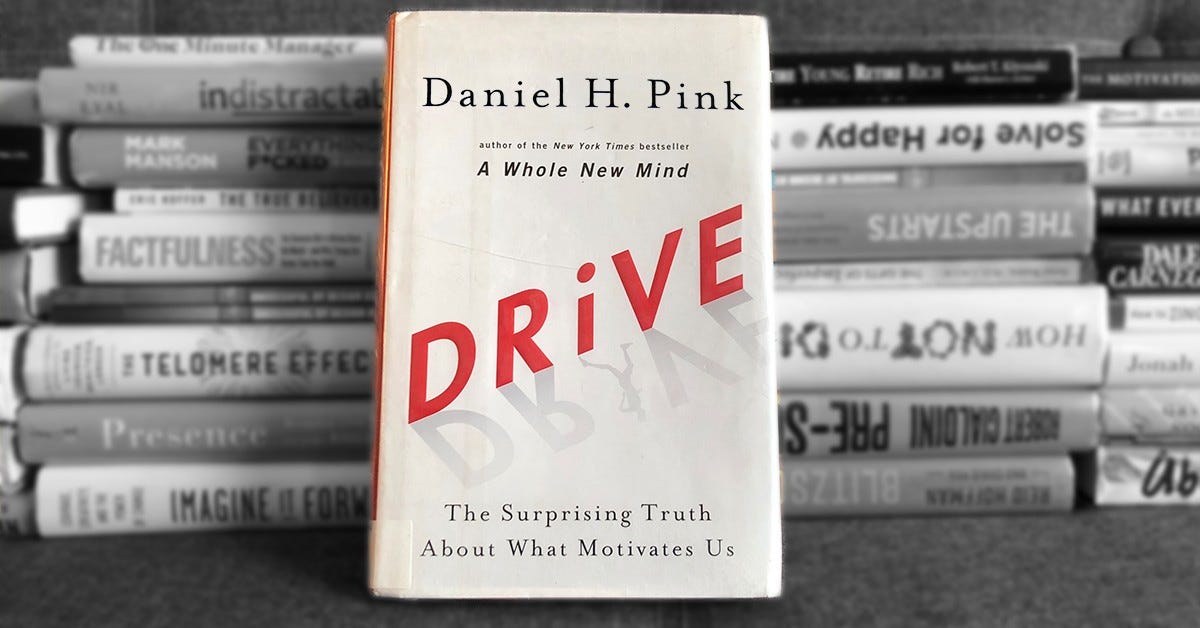
This study was also discussed extensively in Daniel H. Pink's book Drive, which I read very recently. I will write a separate article on this topic; I will also touch upon it there.
Subject of the experiment:
Psychologist Mihaly Csikszentmihalyi developed the “Flow” theory by examining the moments when people are most productive and successful. Details of the study:
In interviews with top athletes, artists, musicians, and scientists, it was stated that the most productive moments for these individuals were when they were completely absorbed in their work, rather than when they were strictly adhering to discipline.
Entering a spontaneous flow instead of making plans made them more successful.
Conclusion:
Instead of forcing discipline, you can be more effective and productive when you truly immerse yourself in what you love.
Source:
Csikszentmihalyi, M. (1975). Beyond Boredom and Anxiety: Experiencing Flow in Work and Play.
3. Success Comes from the Right Environment, Not Discipline (2011, Wharton School)
Subject of the research:
A study conducted by the Wharton School examined the factors that led successful entrepreneurs and leaders to the top. Results:
The most decisive factors in success:
Working with the right people
Being able to seize opportunities
Being in the right place at the right time
Discipline, however, did not always stand out as a critical factor.
Conclusion:
Sometimes, rather than being disciplined, making good use of your environment and opportunities can get you to the top faster.
Source:
Grant, A. (2011). The Surprising Habits of Original Thinkers. Wharton Business School Research Paper.
So, what is the place of discipline then?
Well! There are many examples on both sides; in fact, let alone examples, there are scientific studies. So, is discipline essential for success or not, my friend?
Now we come to the most crucial point.
If discipline is a lifesaver and guarantees success, then how is it that some people achieve incredible things by leading disorganized, unplanned, even chaotic lives?
Or, while we are taught that discipline is the only path to success, is the fact that much more flexible and individual approaches can also work being ignored?
Is discipline just a delusion of our elders? Do they make it mandatory because they think we are doing our best when they see us working? The answer is: Discipline is indispensable for some people, but not for everyone.
✅ For some people, discipline is a savior.
They cannot focus or make progress without daily routines and strict work principles. For some professional groups such as athletes, academics, and surgeons, discipline is a fundamental requirement. Discipline is truly critical, especially in areas like sports where you gain something with every training session you do, or lose something with every training session you don't do.
If you follow my writings on running, you know: If you train regularly and consistently, you'll perform better in races and get injured less often.
If you run as a hobby, a bit more discipline is unfortunately necessary for long distances. But if you're going to run 10 km, having run 4-6 km a few times might be enough.
✅ For some, discipline is a shackle that kills creativity and productivity.
For them, the right environment, the right motivation, and inner flow are important.
Artists, writers, and entrepreneurs sometimes produce their best work not within strict rules, but through freedom and intuition.
Whether discipline is the key to success in a field where it is not mandatory depends on the person and the work they do.
If you feel more productive and happier when you impose strict discipline on yourself, discipline may be the right tool for you.
If discipline stifles you and reduces your creative output, perhaps working in a more flexible, natural flow will be more effective for you.
And here's the main question: Is discipline a tool or an end in itself?
Final Word: There Is No Single Right Answer But…
Discipline can be a perfect tool for some, and a limiting factor for others. Science also shows that there is no single path to success that is always right and necessary for everyone. However, it is important not to miss this point:
Some things really cannot progress without discipline!
A surgeon cannot move flexibly during surgery; they must be disciplined.
An athlete may lose their form if they don't train regularly until a competition.
A student's chances of getting a high grade are left to chance if they don't study for their exam.
If your work requires discipline, you need to sit down and study. Success, in this case, comes not randomly, but with consistent effort.
But everyone's study style is different. If a more intuitive approach is more efficient for you, whether you are an athlete or a student, perhaps you need intrinsic motivation rather than strict rules.
The decision is yours: Apply it and find what works best for you.
So, in your opinion, is strict discipline necessary for success, or is flexible but passionate work more effective?
Frequently Asked Questions
▸What does science say about discipline and success?
Multiple studies support discipline as a major success factor. The Stanford Marshmallow Experiment linked self-control in children to better life outcomes, Angela Duckworth's Grit research found the most successful people were the most disciplined and persistent, and Ericsson's 10,000-hour rule showed that deliberate, consistent practice — not just talent — leads to mastery.
▸Can you be successful without discipline?
Yes, some highly successful people operated without strict discipline. Salvador Dalí worked on instinct and irregular hours, while Steve Jobs was known for disorganization and constantly changing his mind. Their success was driven more by passion, vision, and flexibility than by structured routines.
▸What is the Stanford Marshmallow Experiment and what does it prove?
In 1972, psychologist Walter Mischel gave children a marshmallow and told them they could get a second one if they waited 15 minutes. Children who waited — showing self-control — went on to have better academic careers, higher income, and lower stress as adults. The study suggests self-discipline has a significant impact on long-term success.
▸What did Angela Duckworth's Grit study find?
Duckworth's 2007 research found that the most successful people — including West Point cadets, corporate executives, and elite athletes — were not necessarily the most intelligent, but the most disciplined and persistent. She called this quality 'grit': passion and perseverance toward long-term goals.
▸What is the 10,000-hour rule and who developed it?
Psychologist K. Anders Ericsson developed this concept in 1993 after studying pianists, chess masters, and athletes. He found that top performers averaged around 10,000 hours of deliberate, conscious practice. The key wasn't just time spent, but the quality and intentionality of practice.
▸How did Steve Jobs succeed without being highly disciplined?
Steve Jobs didn't follow strict working hours, frequently changed his mind, and could be impatient or withdraw for weeks at a time. Despite this disorganization, he built Apple into one of the world's most valuable companies by prioritizing vision and flexibility over rigid discipline.
▸How did Salvador Dalí achieve success without discipline?
Dalí worked on instinct rather than a plan — sometimes working for days, then doing nothing for hours. His creative process was spontaneous and intuition-driven. Yet his works ended up in the world's most valuable art collections, suggesting that passion can sometimes substitute for structured discipline.
▸Is talent or discipline more important for success?
According to the research cited in the post, discipline consistently outweighs raw talent. Duckworth's grit study and Ericsson's deliberate practice research both found that persistent, disciplined effort matters more than innate ability. However, examples like Dalí show that intense passion can also drive success.
▸What is 'grit' and why does it matter for success?
Grit, as defined by psychologist Angela Duckworth, is the combination of passion and perseverance toward long-term goals. Her research showed it was a stronger predictor of success than intelligence or talent alone, making it one of the most important psychological traits for achievement.