How I Got So Scared Reading “Pet Sematary” at Night in the Army
- In those four months, I read “thirty” books. Serving in more comfortable some flexibility.
- Books I Read in the Army
- Pet Sematary: Spoiler-Free Summary
- My Thoughts on Pet Sematary and King
- What Happened While I Was Reading the Book
- A pair of glowing green eyes staring straight at me! With a loud crash, I found myself on the floor — I’d fallen off the chair.
- Conclusion
- So, would you want to bring back the ones you’ve lost?
Contents
- In those four months, I read “thirty” books. Serving in more comfortable some flexibility.
- Books I Read in the Army
- Pet Sematary: Spoiler-Free Summary
- My Thoughts on Pet Sematary and King
- What Happened While I Was Reading the Book
- A pair of glowing green eyes staring straight at me! With a loud crash, I found myself on the floor — I’d fallen off the chair.
- Conclusion
- So, would you want to bring back the ones you’ve lost?
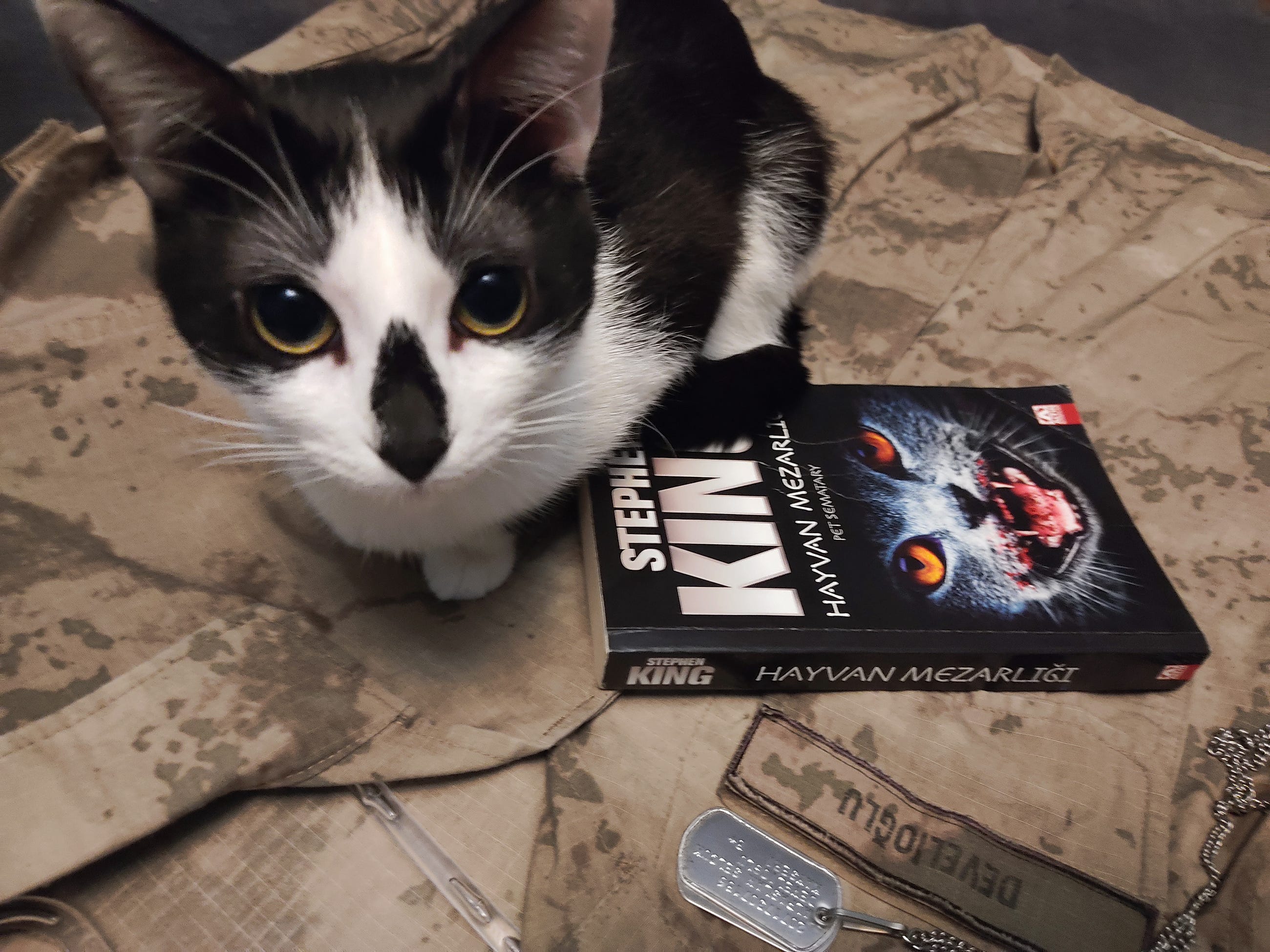
Photo by Author
Here’s a cheerful story I jumped into with joy, thinking, “I’m so glad I’m writing. Isn’t it great that I read Pet Sematary, and write this? Oh yes! I’m writing, and it feels so good!” Well, when I’m involved, can the quirks ever end? Almost every morning, I promise myself, “Today, I won’t do anything strange.” But, here we are again! Welcome to yet another different and funny story.
In September 2018, I started my military service. Right from the start, it was unusual — the date I joined my unit was September 12th. As you’ve read in the title, of course, this is a military story. Let me add a small note here: Please don’t use the phrase “to surrender” when referring to starting your military duty. A recruit joins their unit; criminals surrender to law enforcement. There’s a big difference.
After a whirlwind 28-day training period, I spent over four months in my assigned unit, mostly on night duty. Night guards are usually on standby, known as the rapid response team, ready to be the first responders in case of any night attacks. They rest during the day. I won’t go into further detail — some of it might even be classified. There’s more info on the internet, but I’ll play it safe.
Our team was also called the “emergency cleaning crew” because we were responsible for the area cleanup in the unit’s front yard — collecting trash and cleaning the ground floor bathrooms. 😂 Since we spent nights in the mess hall, we had plenty of free time. And, knowing me, would I ever sit idle?
In those four months, I read “thirty” books. Serving in more comfortable some flexibility.
Imagine reading books in the military! We were in the dining hall, but while some friends were sleeping, some were on their phones, some were MIA (who knows where?), others were in the camera room, and a few were having fun in the radio room. Meanwhile, I was there, devouring books one after another.
Books I Read in the Army
Maybe Turkish named books will not attract you but I translated this article from Turkish. Actually maybe you know some authors.
Who was I missing? I started with the amazing works of Yaşar Kemal: Çakırcalı Efe, the İnce Memed series (Yaşar Kemal wrote İnce Memed inspired by the life story of Çakırcalı Efe. In fact, in a part of the first book, he even includes Efe’s wife, Iraz Hatun. Since I know what happened to Çakırcalı Efe, I still haven’t read the fourth book in the series, even after five years.), Fırat Suyu Kan Akıyor Baksana, Üç Anadolu Efsanesi, Bir Ada Hikâyesi, Bereketli Topraklar Üzerinde.
During a town leave, I bought the first book in the Altered Carbon series and got interested in science fiction. Since phones were banned in the army, I secretly started researching sci-fi books on my phone in the bathroom and ordered some that caught my attention: Do Androids Dream of Electric Sheep? (This book inspired the Blade Runner series), Definitely Maybe,
9 Algorithms that Changed the Future.
Books borrowed from my sister Zeynep, who lives in Ortaca, Muğla: Od by İskender Pala; and from Ahmet Ümit: A memento for Istanbul, Patasana, To Kill A Sultan, Farewell, My Beautiful Homeland.
Some books my lovely wife, Nare sent when I told her I was bored: Brave New World, Ghost in the opera (Le Fantôme de l’Opéra), Türkan, Fahrenheit 451, Norwegian Wood (Norvei no Mori), Hear the Wind Sing.
A few famous running books: Ultra Kitap: Uzun Mesafe Koşu Kılavuzu (A long distance running guide book written in Turkish), What I Talk About When I Talk About Running (Hashiru Koto ni Tsuite Kataru Toki ni Boku no Kataru Koto) (I bought and read other Murakami books I mentioned above later), Bingo’nun Koşusu.
There was also a small bookshelf within the unit, and as far as I remember, from there I read: It’s Not About the Bike: My Journey Back to Life.
And of course, Pet Sematary, also sent by Nare. Thanks for my first horror novel! Just trying to do me a favor, you ended up haunting my nights! Didn’t it cross your mind that I’d be reading this in the dead of night, in a dim corner of the mess hall, with a broken bulb, surrounded by complete silence? And as if that wasn’t enough, did it not occur to you that this might be “a bit(!)” too intense for a first horror novel, you heartless soul?
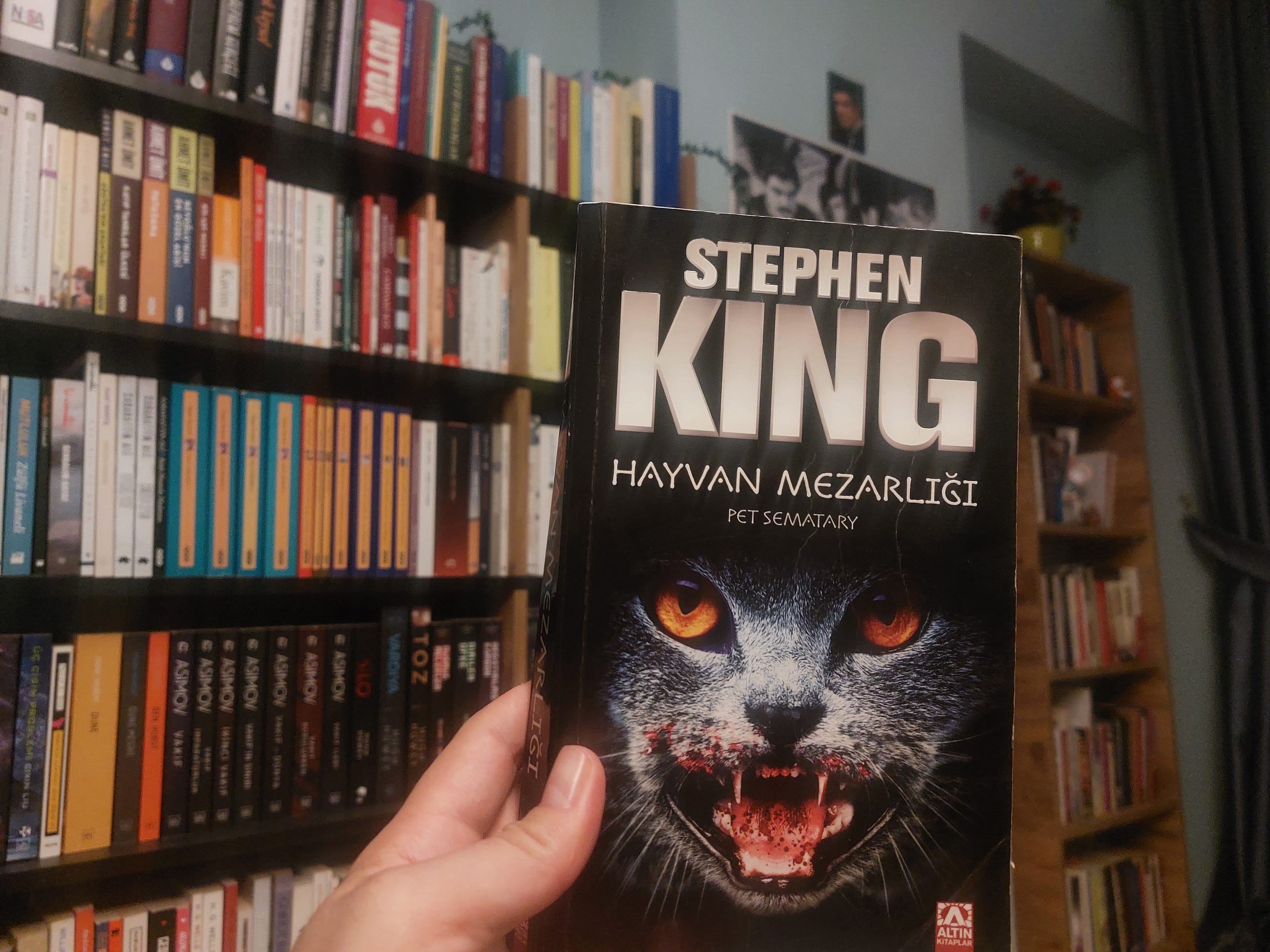
Image by Author. Some of these books were added to our library while I was in the army.
Pet Sematary: Spoiler-Free Summary
Louis Creed moves with his wife, Rachel, and their two children to a small town, hoping for a peaceful life. (We’re talking about King, so of course, our story takes place in a rainy, little town.) Their new home sits on the edge of a forest, and they soon befriend their neighbor, Jud Crandall. Jud warns them not to wander too far into the woods. He tells them about the existence of Pet Sematary, hidden behind large human-planted shrubs, with a darker history than any ordinary cemetery.
One day, the family’s cat, Church, dies unexpectedly. To protect his children from the sadness of this loss, Louis, with Jud’s reluctant guidance, buries the cat in the “Pet Sematary”. The next day, Church returns home, but everything is different. This return marks the start of a process that pushes the boundaries of nature and death, a path from which there’s no easy way back.
My Thoughts on Pet Sematary and King
Perhaps one of Stephen King’s deepest and most terrifying novels. While exploring the challenges of coping with loss, King asks the reader, “What if you had the chance to bring your loved ones back?” This dark journey reveals the shadowy aspects of human nature while reminding us of a harsh truth: some things, once returned, are never the same.
“Pet Sematary” isn’t just memorable for its horror elements but also for its profound impact on the reader’s psyche, touching on humanity’s darkest emotions. Throughout the book, Louis Creed’s struggle with grief and helplessness intertwines with the haunting allure of “bringing loved ones back.” The scariest part is how this idea plants itself in the reader’s mind: What would I do in his place?
King’s greatest strength lies in his masterful blend of the supernatural and the real. A cat buried in a dark cemetery returning to life may seem innocent at first, but as the story unfolds, we see how that innocence transforms into terror. King makes it clear that every return comes with a price — a price not only paid by the characters but also felt by the reader. As you read, you’re not just facing Louis’s fears; you’re confronting your own.
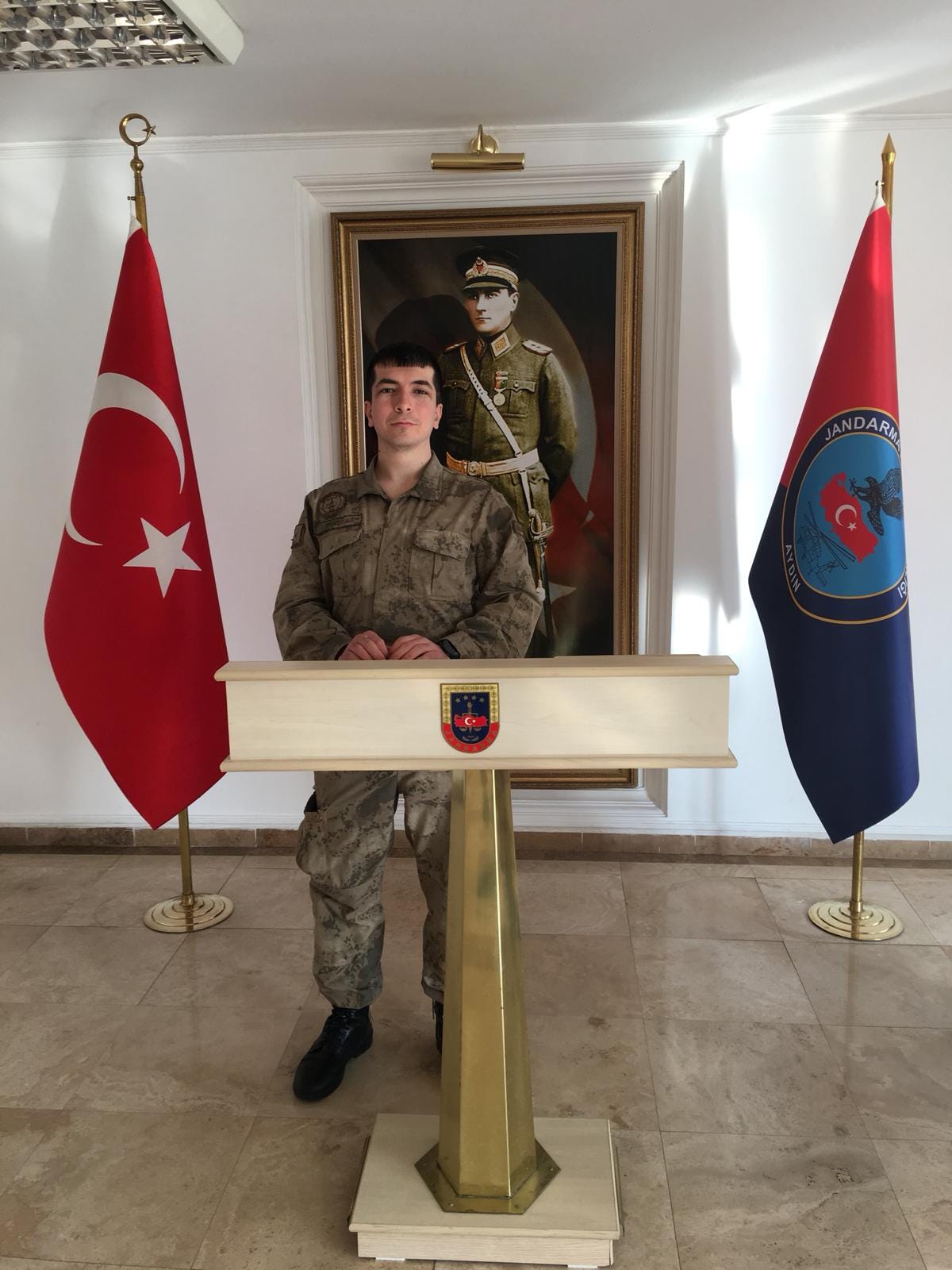
Photo by author
What Happened While I Was Reading the Book
Alright, we’ve reached the main part. Some scary sentences in the book really stood out. The title Pet Sematary aside, reading the lines below on the first few pages made me think, “Wow, this book has a lot. I wonder what else I’m going to see.”
“At the edge of the yard where the grass ended, a narrow path led up the hill, disappearing into the bushes and trees.”
Jud Crandall: “I’ve seen a lot of things in Ludlow. A lot of things.”
In the first pages, Louis Creed moves to his new home with his family. They meet their neighbor, Jud Crandall, who offers both friendship and the first hints of the town’s mysterious atmosphere. In the scene where Jud invites Louis for a beer, there’s a mix of warmth and unease.
This reminded me of how, in the army, people warm up to each other so quickly. You start a shift with someone you’ve never met, but by the time the shift ends, you know all the details of their life. This either relaxes things or adds tension. Jud offering a beer felt like the beginning of a friendship, but there was an underlying feeling that something was bound to go wrong.
During this conversation, Jud talking about his past reminded me of the talks I had with fellow soldiers on duty. Everyone has a story, just as Jud gradually unveils the secrets of the cemetery. Similarly, I sometimes heard unexpected confessions in the army. These stories often seemed innocent at first, but when you dug deeper, they’d take unexpected turns. Jud’s stories about the cemetery had the same feel.
When Jud, Rachel, Louis, and the kids finally reach the path mentioned at the beginning of the book, the scene they see is described in such detail that I felt a sense of helplessness and entrapment in my own corner of the mess hall. I started counting down the days until discharge:
“This month has 23 days left, the next has 30… Is this the one with 31 days, or the other one? According to the knuckle trick we learned as kids, January has 31 days. Or did we start counting from the gap? There are still so many days left… Oh well, someone in the next shift is probably counting, I’ll ask tomorrow. Back to my book.”
The unease grew when I found out that the kids were responsible for keeping the cemetery clean and maintained. Kids have a scary kind of ruthlessness — think Lord of the Flies. The path was more than a road; it was a doorway into the dark corners of both the novel and the human mind. Especially when you’re in an environment where you’re not supposed to question what you see, but inside, you’re questioning everything. That’s the army.
The book mentions the forest so much that it kept reminding me of our runs in the woods and my longing to be there. Winter had just started, and we couldn’t run freely. Even when we could, it was in a limited area on a hard, paved surface, which was rough on the knees and ankles. It would be a long time until my next real run — until freedom. Haven’t read my “Why I Run” post yet? Please, go ahead and check it out.
By page 43, I could almost smell the stench in the story. Look at what Louis’s 5-year-old daughter, Eileen, says:
“I don’t want Church to die like the animals in that (pet) cemetery!” she suddenly burst out. “I don’t want Church to die. He’s my cat! Not God’s cat. God can go find some other cat to kill, but not Church! He’s my cat!”
The tragic incident on Louis’s first day at work and Pascow’s recurring presence in the book brought up a line, “A man’s heart is stonier than the soil, Louis; you reap what you sow and raise what you grow.” Every sentence in the book triggered thoughts, bringing other things to mind.
Where would I find a job after the army? Where would I live? Would my previous workplace take me back? I had a feeling they didn’t want me back. The work was urgent; they definitely wouldn’t wait six months for me — they’d hire someone else. And if there was someone in my place, they wouldn’t need me.
Legally, they had to take me back because I’d left for military duty, but I liked that place and didn’t want to go back with the attitude of “You’re obligated to take me back.” As you can see, I had plenty of time to think about everything and question what would happen.
I was exhausted. I’d gone back to the barracks and lay on the bottom bunk, facedown, with the book in front of me. I’d hung a small flashlight, my uncle’s idea, on the underside of the top bunk so I could read. (Thanks, Uncle İlkay — he read a lot of books this way during his own service.)
In the book, just as Pascow was being taken to the emergency room, someone in the barracks called out:

Photo by author.
— Soldier!
— What is it, man?
I glanced sideways, and there was someone in uniform standing next to me. I thought someone was pretending to be a commander, pulling a prank.
— Get up!
— What do you want, man? I said, not even looking up.
— Get up, I’ve been telling you for half an hour!
— Alright, alright, what is it… Oh… Commander! I didn’t realize it was you, sir. I’m so sorry, really sorry
At that moment, I wanted to disappear. He wasn’t known to be a strict commander, but I was terrified because I had spoken to him so casually. I had no idea what kind of punishment I might get.
— Enough, enough. I was just going to ask what you’re reading.
— Pet Sematary by Stephan…
— King. I know it well. Just because you’re reading King, I won’t say anything about your disrespect. Let this be the first and last time.
— Yes, sir.
— And what’s this idea of hanging a flashlight on the bunk, huh? Smartass.” (As he walked back into the barracks, he said,) “Those who want to read will find a way. And the rest of you… (I’ll leave this part to your imagination so my article can get published).
Ah, Commander, can you just leave me alone for a bit? One part of my mind was thinking, “Louis had that accident on his first day of work,” while the other part was marveling at the absurdity of it all. Here I was, calling a captain (who’s probably a major by now) “man” and “dude,” but thanks to Stephen King, I got off without a punishment.
Judging by the cover, it was clear that something was going to happen to the cat. Sure enough, by page 109, Church had been hit by a car and had died. Louis, who had recently argued with his wife Rachel over explaining death to their five-year-old daughter, received a solemn question from Jud when he saw the cat: “How much does your girl love that cat?” When he got his answer, he knew what had to be done. Of course, the cat would come back to life; that much was clear from the cover. But how would King handle it?
Pascow: “No matter how badly you want it, don’t go beyond, doctor. This boundary was set to be uncrossable.”
Jud: “Just follow me and keep your eyes down. Don’t pause, and whatever you do, don’t look down. I know the way, but we need to move quickly and surely.”
With his unique, unsettling, even disturbing style, King continued to captivate me with carefully crafted sentences that seemed harmless on the surface but held deep, dark undertones.
With Church’s cold body in their hands, they set off for the cemetery with a pick and shovel. I was so excited and curious that my heart was racing like I was running a five-minute kilometer. Suddenly, a loud voice echoed through the mess hall, startling me:
— Hey, Alparslan! Your shift is up, get over here! I’ve been looking for you everywhere. Who the hell put me in charge of these clowns? I even caught Tolga sleeping in someone else’s bed, wearing his uniform. There’s like five of us here, does he think I won’t notice him lying in someone else’s bunk? They think I’m clueless just because I’m not as educated as you lot. But you, at least — you’re an educated guy, still sitting here while your shift has started… Read, read, and one day you’ll turn into… something.
Our Kayseri-born sergeant had lost it. I spent the entire shift trying to figure out what he meant by “something.” In the quiet of the night, weighed down by a heavy bulletproof vest, layered with a thick coat, I could barely move. I was gripping a G3 rifle, cold to the touch with a stiff bolt, weighing about four and a half kilos. My gaze was meant to convey confidence to friends and fear to foes, but all I could think about was Abdullah’s strange vocabulary and whatever he could possibly mean.
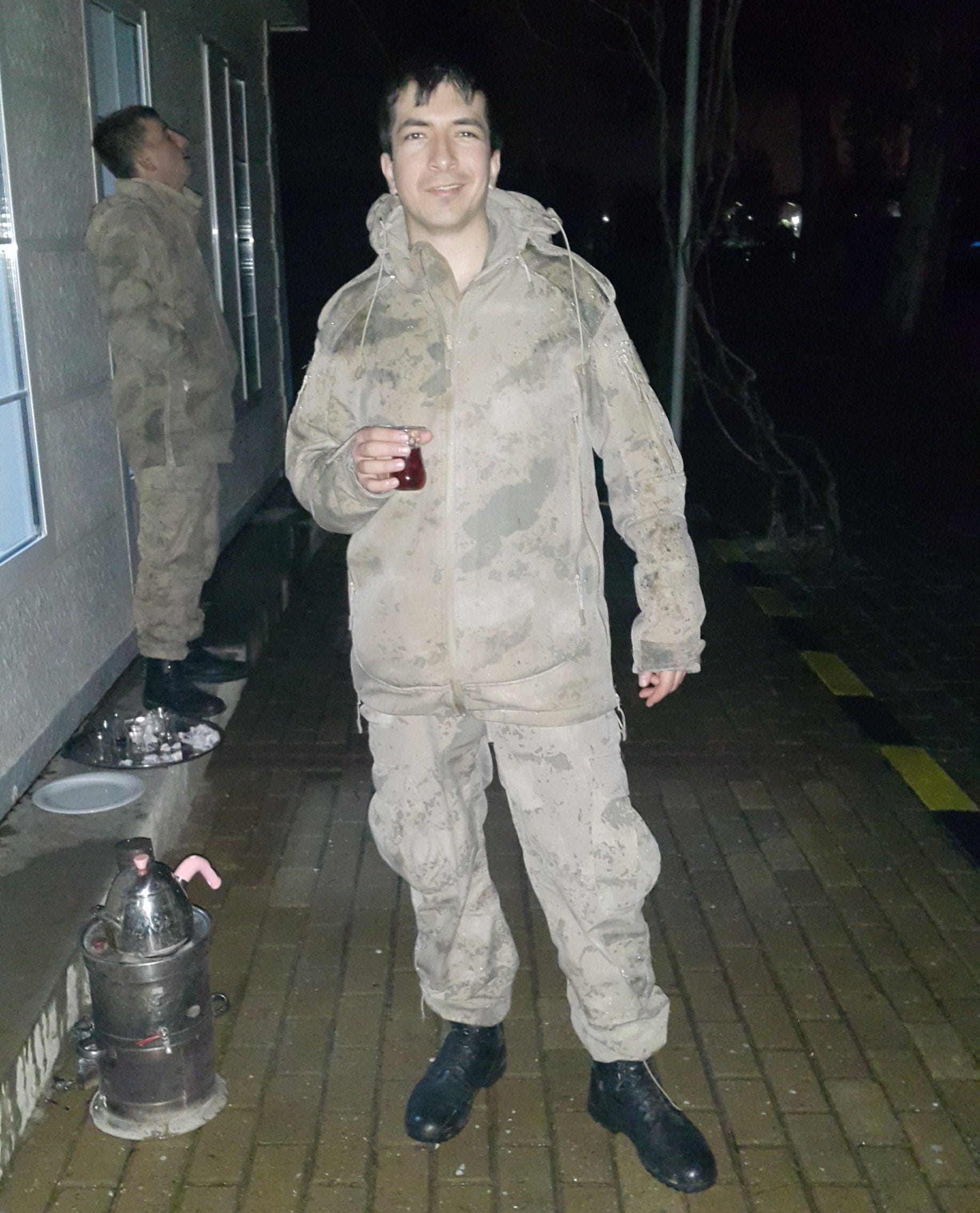
Image by Author. (Our guy from Kayseri in the background.)
He might not have known the word clerk, which would typically come to mind first. He’d been in and out of places and knew what a lawyer was. Lawyers read a lot; maybe he meant “lawyer”? He probably didn’t know words like scholar or intellectual. He knew inspector, likely from his school days, but what does an inspector have to do with reading? Did he mean “librarian”? I doubt he’d ever been to a library.
Have you ever spent two hours thinking about what someone meant by the word “something”? Normally, something would come up and distract you from such thoughts, right? But nope, I just couldn’t shake it off. I’ve never pondered the meaning of a word like this at any other time in my life.
This was the 4:00–6:00 a.m. shift. After this, the standby crew would do a quick cleanup, one person would help bring breakfast from another unit, and then everyone would crash for some sleep.
The next day, I finally got a chance to ask him what he meant:
— Brother, yesterday you said we’d turn into something — ‘something,’ you know? What did you mean by that ‘something’?
Abdullah blinked and turned to me with a completely serious face:
— What else, brother? I was gonna say we’d turn into ‘prefosers,’ obviously. You know, you read and read, and that’s what you become eventually. Just our luck! At this rate, they’ll be giving us reading as a punishment next.
— Wait, wait, what are we gonna turn into? I didn’t catch that.
— Oh, you understood just fine. You’re just asking to mess with me, aren’t you? Think I don’t know you? Keep it up and I’ll lose it on you again, you troublemaker!
He gave me a smack on the back of my neck, but I deserved it. At that moment, I realized that trying to find answers to some things was more exhausting than carrying that G3 around for hours.
Note: The purpose of this section is not to mock those who, for various reasons, haven’t had the chance to improve themselves in life. That’s not who I am. If I unintentionally hurt or angered anyone with my words, I apologize in advance. There was never any tension between Abdullah and me.
Even when I joked around, he knew that I respected him, cared for him, and never looked down on him. Every morning, we cursed together about the person who, just because he wasn’t part of the standby crew, would leave the bathroom in a mess — just for us to clean it up. Oh, the things we cleaned, the trash we emptied…
After lunch, I had a few hours to spare, so I rushed back to my book. Jud and Louis had crossed the “barrier” and were hurrying down the path beyond.
— Jud, where are we going? What business do we have beyond everything else?
— I’ll tell you when we get there. Watch out for those clumps of bushes on the ground.
King heightened the suspense around this mysterious area that kept us on edge. Was the creature passing in front of Jud and Louis a huge jaguar, a deer, or maybe a bear? And what was with that strange mist? How did Jud know the way through the swamp? And whose scream and laughter echoed from the forest?
Didn’t this scene resemble the “Dead Marshes” in The Lord of the Rings?
The guide through the path: Gollum and Jud. Both had their losses, secrets, ghosts, and blood on their hands. The mystical similarity between the two swamps was striking (though yes, I know all swamps look alike in some way). Both contained a supernatural threat and were filled with tragedies of the past: the Dead Marshes displayed the souls of the war dead, while King’s swamp served as a cursed place that brought the dead back to life. Each swamp symbolized the risks of facing death and crossing dangerous boundaries, presenting both physical and psychological obstacles.
Stephen King has read The Lord of the Rings and was influenced by Tolkien’s works. In particular, The Dark Tower series was greatly inspired by J.R.R. Tolkien’s epic storytelling style. King has mentioned that, while developing this series, he drew inspiration from Tolkien’s approach to world-building. The Dark Tower combines Tolkien’s mythological style with elements of American Western culture and post-apocalyptic themes.
King’s admiration for Tolkien also fueled his desire to create expansive worlds and long-lasting narratives. Like Tolkien’s epic sagas, King aims to offer readers interconnected universes and rich backstories. In this regard, Tolkien stands out as a significant source of inspiration on King’s literary journey.
The pages turned, night fell, midnight passed, and another dawn grew closer. The standby crew moved to the mess hall. Meanwhile, I, book in hand, waited by the window for my shift to start, reading about Church’s scary behavior after its return.
“A large, misshapen shadow appeared on the tiled wall of the bathroom. Something brushed his shoulder lightly, like the head of a small monster or a giant snake. Louis shot up as if struck by lightning, water spilling over the edge of the tub. Turning around in a terrified jolt, he came face-to-face with the cat, sitting on the toilet lid, its murky yellow-green eyes fixed on him.”
My imagination ran wild, and I was so drawn into the scene that it felt like I was the one experiencing it, like I was the one suddenly seeing Church. I was alone in the mess hall, it was night, and I felt a sudden urge to look out the window. I could see the lights of the unit’s apron from where I was; all of them were supposed to be on.
I had tipped my chair back, balancing on its rear legs. When I looked outside, I was completely stunned by what I saw just a few meters away:
A pair of glowing green eyes staring straight at me! With a loud crash, I found myself on the floor — I’d fallen off the chair.
The shock left me unable to get up from the floor for a while. Despite working night shifts regularly and being used to late hours, I had never seen anything like this. What were those eyes? Was I hallucinating, or was it real? Or had my fellow soldiers read the title of my book and decided to prank me? But then, who would go through all the trouble for a joke like that? And how could anyone make a joke out of a pair of glowing eyes?
Slowly, I rose to window level and looked outside. They were still there. They hadn’t moved at all.
“Get lost!” I muttered. “Get away from me! Are you Church, a mosque, or a chapel? Just leave me alone!” But it didn’t go away. It didn’t even move. It just kept staring, which somehow made it even creepier.
This unsettling mystery went on for what felt like ages. Every few minutes, I’d get up to check, then sit back down when I still couldn’t make sense of it. I’d slumped down against the radiator when Abdullah walked in:
— (Noticing me) What’s this guy up to now? What are you doing on the floor, man? Hahaha!
— There’s something out there!
He looked outside and said:
— Don’t you know the local wildlife, my poor scared buddy? Were you scared, huh? It’s just a rabbit, man!
— A rabbit? Seriously?
— A wild rabbit, that’s all. Haven’t you ever seen one? Use your flashlight and look.
And just like that, the mystery was solved. The eyes that had scared me so much, keeping me frozen on the floor, belonged to a rabbit. I later learned that there were quite a few rabbits around the base. In fact, when their numbers increased, they would hold a “catch and release” contest, with double leave passes for those who caught one. A group of three or four would corner a rabbit, throw a blanket over it, and then release it outside the perimeter.
Digging well and traveling under the ground as they do, our furry friends apparently had to be tossed outside for it to be of any help… Welcome to military logic — don’t question it. One early morning, they even paid me a visit while I was on duty.
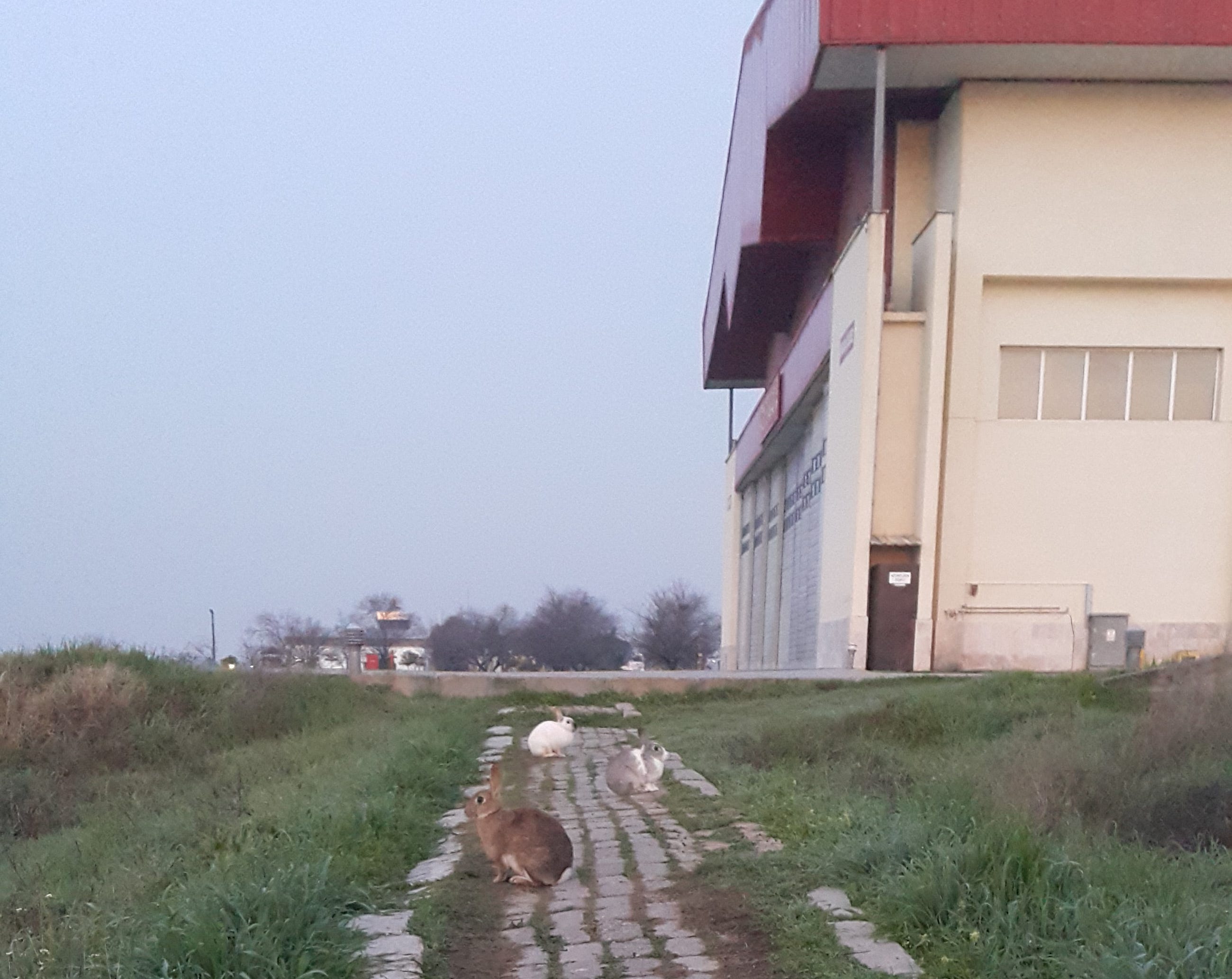
Image by author.
Conclusion
Of course, I finished the book, but I won’t reveal any more and spoil the story. I think I’ve already tempted some of my readers enough with what I’ve shared so far. Time to place a few King orders or borrow a copy from the nearest library.
King’s style pulls the reader into the story, masterfully building a dark and eerie atmosphere. The book isn’t just a horror story; it also explores themes of death, grief, and acceptance. With each page, you’re chasing both ghosts and the fears lurking within the human mind. And while it frightens, it also teaches one of life’s hardest truths: Sometimes, the dead should stay dead.
That’s King. In his books, he hints at the source of danger, evil, or terror without fully revealing it. Whatever it is that brings death or pain, the real source of fear is often left unexplained. This tendency reaches its peak in Pet Sematary.
The cemetery was supposedly built by Native Americans, but how? Even if Louis asks, there’s no answer. King’s other works follow the same pattern. For example, in another book (The Mist), a mysterious mist swallows anyone who enters it — they vanish, screaming. The origin of the mist, what lies within it, is never explained. He’s firm in not revealing all.
So, would you want to bring back the ones you’ve lost?


Frequently Asked Questions
▸What is Pet Sematary about?
Louis Creed moves with his wife Rachel and two children to a small town seeking a peaceful life. A neighbor introduces them to a hidden Pet Sematary with a darker history than any ordinary cemetery. When the family cat dies, Louis buries it there with the neighbor's reluctant guidance.
▸Is Pet Sematary one of Stephen King's scariest books?
The author considers it perhaps one of King's deepest and most terrifying novels. It stands out not just for horror but for its profound psychological impact, touching on humanity's darkest emotions.
▸What happened to the soldier while reading Pet Sematary at night?
He was so frightened during his night duty reading session that he fell off his chair with a loud crash. He described seeing a pair of glowing green eyes staring straight at him as part of the scare.
▸How many books did the soldier read during his army service?
He read thirty books during four months of army service. Pet Sematary was among them, sent to him by a friend named Nare.
▸Who sent Pet Sematary to the soldier?
A friend named Nare sent him Pet Sematary, apparently to help cure boredom during army duty. The plan backfired when reading it alone at night proved genuinely terrifying.
▸Is Pet Sematary good for someone who doesn't usually read horror?
Based on the soldier's experience, Pet Sematary is gripping enough to hook readers quickly, with strong opening lines that signal the book has a lot to offer. However, its psychological depth and horror make it intense, especially when read alone at night.