My Sci-Fi Madness #4: Is The Last of Us Sci-Fi? I Watched the Show Before Playing the Game
- This post contains spoilers for the first two seasons of The Last of Us show and both games.
- Short Summary of the Story
- Main Characters
- Plot Development
- Themes
- Sci-Fi Elements in the Games and the Show
- Where Did the Cordyceps Idea Come From? Planet Earth and Fringe
- Things That Bothered Me
- Overall Assessment
- So What If Ellie Had Been Woken Up and Asked?
Contents
- This post contains spoilers for the first two seasons of The Last of Us show and both games.
- Short Summary of the Story
- Main Characters
- Plot Development
- Themes
- Sci-Fi Elements in the Games and the Show
- Where Did the Cordyceps Idea Come From? Planet Earth and Fringe
- Things That Bothered Me
- Overall Assessment
- So What If Ellie Had Been Woken Up and Asked?
Image by ChatGPT and Canva
This post contains spoilers for the first two seasons of The Last of Us show and both games.
The Last of Us was born as a game in 2013 and became an HBO series in 2023. And what a series it is! Nare and I came at it from the opposite direction: we watched the show first, then finished both games. Remember the post about what games can add to our lives, where I used a story-driven game as an example? Yes, that one. Nare is my sweet editor and lovely wife. While I played on hard, she watched, putting up with my countless restarts and sometimes resting her eyes.
When the show’s cast was first announced, Bella Ramsey not looking like Ellie and Pedro Pascal not looking like Joel was heavily criticized. But I have to give their acting its due: both were excellent. Bella came across as more confident to me than she did in Game of Thrones.
I collected the differences between the show and the games scene by scene in a separate post.
While playing, one question kept spinning in my head: where does this work sit within science fiction? Post-apocalypse, drama, the fear of survival… It has all of them. But is an apocalypse on its own enough to call something science fiction? In the post where I took Dune apart, I called it “a fantasy book with sci-fi elements.” Let’s see how The Last of Us does on the same test. Let me also draw a line from the start: being science fiction is one thing, and the science it builds convincing me at every point is another.
Short Summary of the Story
The Last of Us takes place in a world where a fungus that infects humans has brought down civilization. Twenty years after the outbreak, the smuggler Joel is tasked with delivering fourteen-year-old Ellie, who was bitten but never turned, to the Fireflies, who hope a vaccine can be developed from her. The first game tells the story of these two strangers becoming father and daughter to each other as they cross the country; Part II tells how the decisions made in the first game come back years later to hit these people.
Main Characters
Joel Miller: A smuggler who lost his daughter on the first night of the outbreak. Protecting Ellie reopens a door he has kept shut for years.
Ellie: A foul-mouthed, funny girl who is immune to the fungus. She grows up under the weight of decisions others make on her behalf and of having survived.
Tess: Joel’s smuggling partner. She believes, before Joel does, that taking Ellie is more than an ordinary delivery.
Tommy: Joel’s brother and a former Firefly. He has built a new life in Jackson.
Marlene: The leader of the Fireflies and a friend of Ellie’s mother. She is torn between protecting Ellie and sacrificing her for humanity.
Abby: The daughter of the surgeon Joel kills at the hospital. A former Firefly who later joins the Wolves as a fighter. In Part II, we see the other side of the story through her eyes.
Dina: Ellie’s girlfriend and her companion on the road to Seattle. She is also part of the chance that Ellie could build a life beyond revenge.
Plot Development
Loss and the Journey: Joel loses his daughter Sarah to a soldier’s gunfire on the first night of the outbreak. Twenty years later, he and Tess take on the job of getting Ellie out of the city. When Tess is infected and stays behind, the journey falls to Joel and Ellie. Losing Henry and Sam, Joel’s serious injury and Ellie’s effort to keep him alive steadily strengthen the bond between them.
The Hospital and the Lie: To develop a vaccine, the Fireflies want to remove the fungus from Ellie’s brain; Ellie won’t survive the surgery, and nobody has asked her what she thinks. Joel kills the surgeon, 17 Firefly soldiers and Marlene, and saves Ellie. Then he tells her the Fireflies found other immune people but gave up looking for a vaccine. The first game and the show’s first season end with an oath built on that lie.
Revenge and a Shift in Perspective: In Part II, Abby kills Joel to avenge her father. (Man, Pedro’s death in Game of Thrones was brutal too!) Ellie and Dina follow her to Seattle. When Ellie’s path crosses Abby’s at the theater, the game makes us live the same three days again, this time through Abby’s eyes. We meet someone who lost her father and who risks her life to save Yara and Lev from the enemy side. Suddenly we are on the other side of the revenge story.
The Price of Letting Go: Abby spares Ellie and Dina when Lev steps in, but despite the farm life she has built, Ellie can’t leave Joel’s death behind. She goes after Abby once more. About to kill her, she gives up and goes home, but Dina and baby JJ are gone. In the empty house she picks up Joel’s guitar and can’t play it the way she used to because she has lost two fingers; that single frame shows the price her journey of revenge made her pay.
Themes
Survival and Humanity
People willing to do anything to survive being as big a threat as the infected.
Parenthood
The wish to protect someone getting mixed up with the right to decide for them.
One Life or Humanity?
A child being sacrificed for a possible vaccine without even being asked for consent.
Revenge and Its Price
Becoming the villain in someone else’s story while chasing your own pain.
Lies and Trust
The lie Joel tells after his decision to save Ellie wearing away their relationship.
The Last of Us is about these people, but the world that pushes them toward those decisions isn’t built at random either. If we’re looking for the sci-fi side, we need to look at biology, not spaceships.
Sci-Fi Elements in the Games and the Show
Cordyceps:
A real zombie fungus. The idea rests on something real: the Ophiocordyceps unilateralis species complex changes the behavior of some ants and uses them to spread its spores. But the human infection in the game is an assumption built on top of that reality.
Interestingly, the fungus may not even need to invade the ant’s brain to do this. In a study led by Penn State, the infected ants examined had fungal cells spread throughout their muscle tissue, while their brain tissue had not been invaded. Reality is weird enough on its own, my friend.
A Warming World and the Body-Heat Barrier:
The show’s opening, set in 1968, has an epidemiologist explaining that fungi adapting to a warming world could become a threat to humans. One detail matters here: fungi that cause disease in humans already exist. Our body temperature is a barrier that keeps many fungi out, not all of them.
In 2019, Arturo Casadevall and his colleagues suggested that global warming may have played a role in the emergence of Candida auris. This hypothesis, also covered by Johns Hopkins, says that adapting to heat may make it easier for some fungi to get past that barrier. The cause isn’t settled, but the question the show asks has a counterpart in real science.
Stages and Types of Infection:
We see a progression from freshly turned runners to stalkers that hide and ambush, to blind clickers and fungus-armored bloaters. Part II adds shamblers that release burning clouds and the Rat King, made of infected fused together. The way the body changes as the infection progresses diversifies both the biology of the world and the dangers we face.
Clickers and Echolocation:
Clickers can’t see, so they find their way by the echoes of their own clicks. In the real world, too, some blind people like Daniel Kish can learn to sense their surroundings from the echoes of clicking sounds. That idea is behind holding our breath as we sneak past a clicker.
Spores and the Tendril Network:
In the games, we wear gas masks because of spores in the air. In its first season, the show instead puts forward a tendril network that carries movement at one point to infected far away. In the fifth episode of the second season, spores come into play as well; the creators explain this choice on the official podcast. Mycelium, the threadlike network of real fungi, gives the idea some footing; the network working the way it does in the show is a separate assumption.
Immunity and the Vaccine:
In the game, it’s unclear why Ellie is immune; the Fireflies think they can develop a vaccine by studying the fungus inside her. The show adds a new clue with Anna being bitten during childbirth. According to the doctor, a chemical messenger produced by the fungus inside Ellie makes other fungi think she is already infected. That way, the story looks for its own biological explanation of immunity too.
Where Did the Cordyceps Idea Come From? Planet Earth and Fringe
The game’s fungus idea comes from the ant scene in the BBC documentary Planet Earth. The ant under the fungus’s influence clings to something and dies, then a fungal stalk grows out of its head. This is the footage the Naughty Dog team says inspired them. The Last of Us asks the most unpleasant question that footage invites: what if it happened to humans? One more small sci-fi link: in the US version of the documentary, the narrator is Alien’s Ripley, Sigourney Weaver.
Fringe’s 2011 episode “Alone in the World” also has a fungus that releases deadly spores, spreads through its tendrils and works like a network. Walter Bishop says it is a mutated Cordyceps. On top of that, the bond between Walter, who lost his son, and a boy the fungus doesn’t affect also brings Joel and Ellie to mind.
For the game, the documentary link is clear; I couldn’t find any statement that Fringe drew on the same source. Although the episode aired before the game was announced, the game was already in development at the time. It’s hard to build a copying claim on that. There’s no proof, but I like the idea that their common ancestor might be that ant.
Honestly, I didn’t know which section to put this in, so I’ll write it here. Cannibalism emerging in this world is very believable. If anything, it’s barely explored. Twenty years have passed since the apocalypse; there are places that can produce food, like Jackson and the WLF’s stadium, but not everyone gets a seat at those tables. What is everyone else eating? In the show, passing human meat off as “deer” was a nice detail, and so was the woman in the kitchen settling for that answer. Is she silent because she knows, because she suspects or because she truly believes it? We don’t know. But the scene makes you think: if you learned the truth, could you push that plate away? Maybe “deer” is a good enough answer for a hungry person.
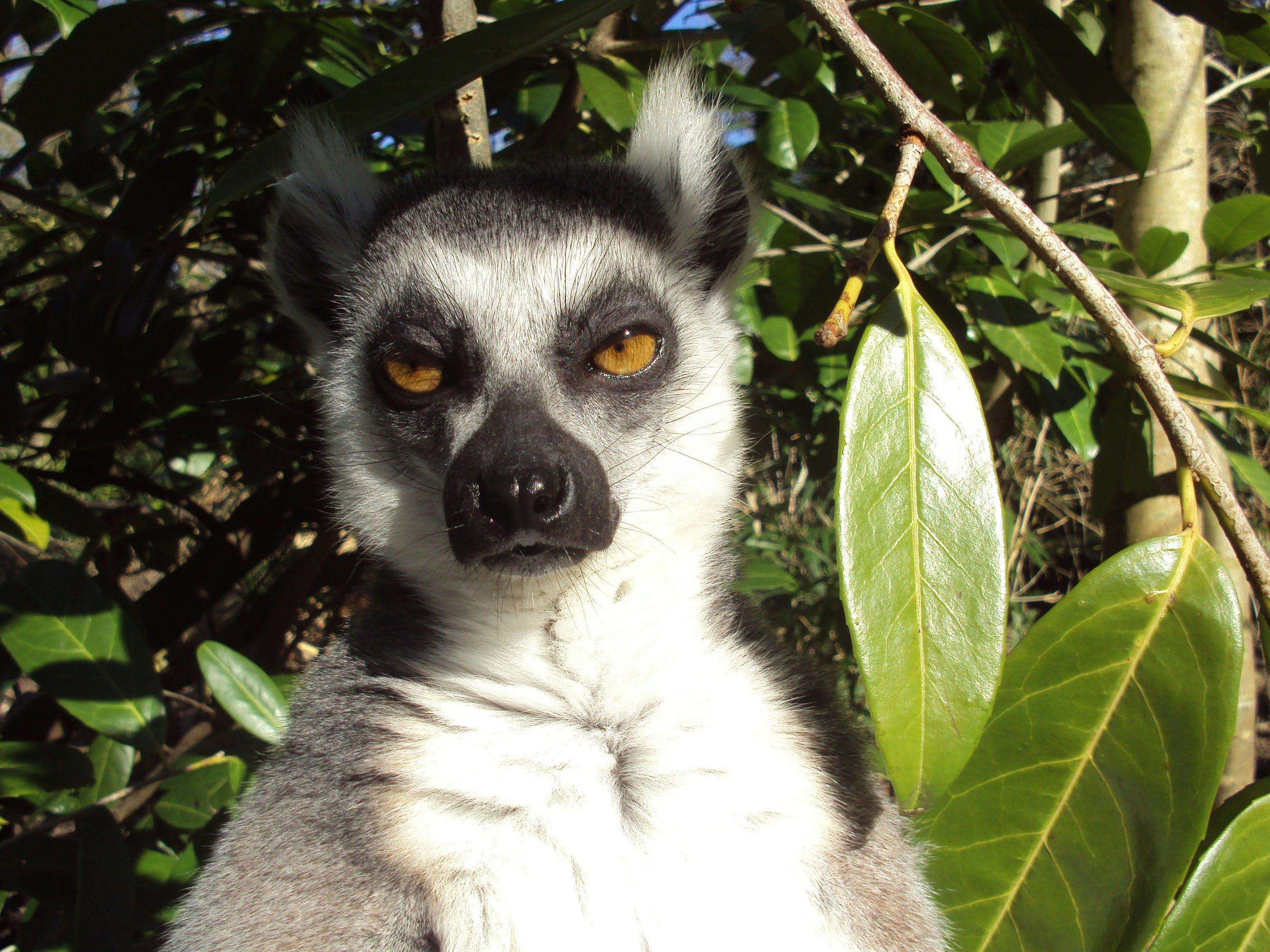
Photo by Michelle Phillips on Unsplash
Things That Bothered Me
Note: These are entirely my own feelings. I finished both games and watched the first two seasons of the show; I loved them both. Still, as a sci-fi maniac, there were things I got stuck on. Accepting a premise is one thing; being curious about its consequences is another.
One Surgeon, One Day, One Brain: What Kind of Vaccine Recipe Is This? Developing a fungal vaccine is a tough process in its own right; a 2025 review lays out the obstacles and the vaccine candidates in this field. Not having a vaccine doesn’t mean one can never be made. That isn’t my objection, though: my objection is how quickly the Fireflies decide to kill the only person known to be immune. COVID-19 put us through hell for years, man. Even developing that vaccine took months. And this is a fungus, for crying out loud!
Ellie is brought to the hospital, tests are run and the decision to operate comes the same day. According to the surgeon’s audio recording, the fungus can grow in cultures taken from Ellie’s blood. Of course, we don’t know whether a blood sample would tell them the same thing as the tissue in her brain, but the story doesn’t show us why other research routes wouldn’t be enough either. You have the sample, you have the girl, what’s the rush, doc? I would have liked to hear a little more of the scientific reasoning behind this irreversible decision. Part II saying that the surgeon was the only person who could develop the vaccine also ties the research to a single scalpel.
There’s also the fact that the same doctor both performs the brain surgery and is the only one who can develop the vaccine. In reality, brain surgery and vaccine development require different expertise. We could explain Jerry handling more than one job by the shortage of specialists twenty years after the apocalypse. His task at that moment is to surgically remove the fungal tissue from Ellie’s brain; producing a vaccine in the lab is the next stage. But the story ties the hope for a vaccine to the same person. I think having the person who could save humanity be the doctor in that room makes the moral weight of Joel’s choice hit harder. For dramatic effect, the creators leaned on post-apocalyptic desperation and merged two different specialties into one character; they stretched medical reality a bit too far here.
The Birth Story:
A clue worth investigating. In the show, Anna is bitten while giving birth. Marlene knows at least some of the circumstances of that birth; the doctor also thinks the fungus has been growing inside Ellie since birth. That doesn’t mean they know how the immunity came about. We don’t know whether repeating the same conditions would lead to the same result. But once the show adds such a clue, I have to ask: why do they move to a surgery that will kill Ellie without investigating this possibility further? I would have liked to see why the option of studying the only sample they have for longer was ruled out. In the game, at least, the cause is admitted to be unknown from the start.
From Ant to Human:
The leap between species. The real fungus being so host-specific in how it controls behavior makes its ability to steer human behavior a big assumption. The story can choose this as its starting point; I have no objection. But getting past the body-temperature barrier and controlling the human body and behavior aren’t the same thing. On top of that, according to Tess, an infected person can turn within two days. Those two days aren’t the time it took the fungus to evolve; they’re how long it takes a person to turn after being infected. What I wonder is this: how does such a sweeping change happen in such a short time? Would a little more explanation have hurt?
Infected Who Have Gone Hungry for Twenty Years:
In the show, Joel says some infected last a month or two, but some have been walking around for twenty years. Bloaters are the ones who have been infected for a long time anyway. But what have these bodies been living on all these years? If the fungus consumes its host’s tissue, won’t that resource run out at some point? Do they go dormant, or do they get energy from somewhere else? I couldn’t find an answer to this in either the show or the games. If we’re doing sci-fi, I think this deserves a sentence too.
How Do the Tendrils Carry the News So Fast?
Electrical activity has been measured in fungal networks. For example, a study published in 2026 calculated a propagation speed of about 40 centimeters per hour for signals measured in a substrate colonized by oyster mushrooms. That isn’t a universal speed limit for all fungi; it’s the result of one particular experiment. Still, there is a huge gap between that speed and distant infected springing into action almost instantly in the show. The tendril network is a nice idea; I’m also curious how that speed is possible in a fictional fungus.
In Part II, Immunity Stays but the Research Steps Back:
It would be unfair to say “immunity is forgotten” in the second game. The hospital decision, Joel’s lie and Ellie’s effort to give her life meaning still carry the story. What I think is missing here is any continuation of the biological research. When the hospital recording says the only person who could develop the vaccine is dead, the possibility of research largely closes.
I also wonder whether there are other researchers or other efforts in this world. We see new types of infected, but our focus is revenge and its price. I understand the choice; that story actually knocked me flat. Still, I would have liked to learn a bit more about the fungus.
Who Would Have Distributed the Vaccine?
Let’s say we found the vaccine. Will FEDRA distribute it, or the Fireflies? Will everyone get it, or only those standing under the right flag? And in exchange for what? How do we know the vial that could save humanity won’t turn into a weapon for bringing people into line?
Joel’s Slipping Guard:
Joel kills Marlene saying she would only come after Ellie. So we can’t say he never considered that he himself might be followed. I understand life in Jackson softening him, but the Fireflies breaking up doesn’t mean the people who lost loved ones have settled the score. I would have expected him to be a bit more careful, allowing for the chance that one of them might devote their life to revenge.
Bonding with Abby:
A museum, an aquarium. Playing Abby was especially uncomfortable for me. Nare said she was too muscular, and I joked, “She must be on something”; we gossiped about Abby quite a bit. The game wants me to understand her, fine, but handing me the controller doesn’t build that bond by itself. These debates haven’t stopped since the game first came out. I definitely die more while playing Abby, and I’m happy about that.
It also felt a bit like taking the easy way out: you take Ellie and Joel through a museum of dinosaurs and space, then take Owen and Abby through an aquarium and expect me to feel a similar closeness. The feeling it left me with was: here we go again, trying to make us love characters with a sightseeing trip. I wish you had found another way for Abby instead of assuming the bond from the museum would form again at the aquarium. Letting us play Abby is a brave choice, but the aquarium trip didn’t build that bond for me.
And the similarity doesn’t end with the aquarium. You gave Joel and Ellie a warm moment with giraffes; this time you have Abby and her father save a zebra. With the first, I get the payoff of a bond built over a long journey. With the second, I’m expected to feel a similar warmth, within a few scenes, for people I’ve only just met. Abby protecting Lev also echoes the bond Joel built with Ellie. I see the parallel, but I don’t feel the same thing. Museum and aquarium, giraffes and zebra, Joel and Ellie, Abby and Lev: the method you use to bring characters closer becomes too visible.
Where Is the Rest of the World?
The show stops in Jakarta, then the weight shifts back to the journey across America. What happened in Europe, in Asia? Did completely different orders form against the same outbreak? This is a road story, not a world atlas; I don’t expect it to cover every country. But a radio broadcast, a letter from abroad, news of another research effort… I wish it had opened up this world’s horizon a little more.
I’ve grumbled this much, but if I finished both games and am still chasing these questions, it’s clear that I care about and love the world it built.
Overall Assessment
Let’s go through the four criteria from the series’ introduction here as well. Weighing them one by one isn’t a test that settles a work’s genre once and for all; it’s a way to weigh a work’s sci-fi side together with what it left me with as a story.
Scientific and Technological Innovations:
Here, science fiction isn’t born from a new device. As technology regresses, the premise of a real fungus adapting to humans changes the world. Despite its holes, the story builds a biological cause instead of a supernatural explanation. For me, this is the strongest pillar of the genre argument.
Social and Philosophical Questions:
After the outbreak, military rule in the quarantine zones, resistance groups, and the groups in Jackson and Seattle build different orders. Different societies emerge from the same disaster. The hospital decision isn’t just the question “One person or humanity?” either; who the decision belongs to and what we risk amid uncertainty are part of it too.
Alternative Realities and Future Scenarios:
The first game sets the outbreak in 2013 and the main journey twenty years later. The show moves the outbreak to 2003 and the journey to 2023. The calendars differ, but both show a possibility that branches off from the world we know: an order where nature reclaims the cities and people live among the remains of the old world.
Narrative and Character Development:
It doesn’t decide on its own whether a work is science fiction, but this is the real force that hooks me here. Joel’s urge to protect clashes with Ellie’s wish to have a say over her own life. Part II, by having us control Abby, forces us to look at the life of the person we hate. This narrative strength also makes up for the places I found lacking on the science side.
We live through the death of Joel’s daughter second by second. The years he spent killing people with Tommy, on the other hand, vanish within a few sentences. We know Sarah’s name; we don’t even know the names of those he killed in those years. What if the game had started in the home of one of those people, and Joel and Tommy had walked through the door? Would saying “They’re just trying to survive, man” still be this easy? I guess we love Joel partly thanks to the parts we don’t play.
Joel’s legacy isn’t just the guitar. Ellie learns how to play the guitar from Joel, and also how to make people talk through torture. From the same man, one lesson puts her fingers on the strings and the other on a trigger. When we see the guitar, we call it “a keepsake from her father”; the other legacy is just as lasting.
So What If Ellie Had Been Woken Up and Asked?
Everyone in that operating room has something to say. The doctor aims to save humanity, Marlene believes the sacrifice is necessary, Joel won’t give up his daughter. Ellie? She’s under anesthesia. While all these people decide what her life is worth, she can’t even attend the meeting. Look where the world has come in twenty years: we’re shocked that a fungus can take over a human body, yet we find it perfectly normal for people to have a say over each other’s lives.
What if Ellie, who asked on the way whether the procedure would hurt, had also been told she would die… What if she had agreed anyway, and Joel had fallen apart in fits of crying… Okay, that’s turning into a Turkish soap opera.
Oh Joel, you don’t shoot a doctor holding nothing but a scalpel, brother! Sure, the doctor isn’t innocently taking someone’s blood pressure either; he’s getting ready for a surgery that will kill the girl, and I’ve already grumbled enough about that above. Fine, you’ve killed so many people up to that point; adrenaline through the roof, pulse at 180. You’ve come to see Ellie as Sarah, and holding back is really hard. But an unarmed doctor, come on!
And then you swear to it, looking the girl straight in the eye. Fine, you lost it at the hospital, but did the adrenaline tell that lie too, man?
I called Dune “a fantasy book with sci-fi elements.” My verdict on The Last of Us is different: biological science fiction disguised as zombie horror. I wasn’t convinced by every explanation, but the question at its core, “What if this fungus adapted to humans?”, changes the world it builds and people’s decisions from start to finish. That’s the connection I was looking for.
And think about that museum: dinosaur bones in one room, a space capsule in another. Both are relics of the past. The child of a species that went to the Moon is now working out how to reach the next city alive. Only to be cut open at a hospital… The Last of Us has taken the future so far that our past has become Ellie’s science fiction.
Frequently Asked Questions
▸Is The Last of Us science fiction?
It can be called biological science fiction. There is no advanced technology, but the story starts from the real effect of the fungus Ophiocordyceps unilateralis on ants and imagines a future where it jumps to humans. Having nothing supernatural in it sets it apart from zombie fantasy.
▸Is the Cordyceps fungus in The Last of Us real?
The fungus is real, but it does not infect humans. Ophiocordyceps unilateralis infects carpenter ants in tropical forests, takes over their behavior and releases spores from a stalk that grows out of the ant’s head. Most fungi cannot survive at human body temperature, so the outbreak part is fiction.
▸Could the Fireflies’ vaccine really work?
In real life, there is no licensed vaccine against any fungal infection in humans; only a few candidates have reached clinical trials. Even the game’s own pamphlet says “There is no vaccine for CBI.” In 2025, Neil Druckmann said on a podcast that their intent was for the Fireflies to be able to make the cure.