A New Watch, A New Gadget: When Excitement Becomes an Excuse, Not Motivation
- Is a Running Watch Really Necessary?
- What is a "Buying on Enthusiasm"?
- Where Does Real Motivation Come From?
- Scientific Foundations
- 1. Symbolic Self-Completion Theory
- 2. Compensatory Consumption
- 3. Fresh Start Effect
- 4. False Hope Syndrome
- How to Build Motivation?
- Before the Hills Begin: The Road to Kaçkar
- Conclusion
Contents
- Is a Running Watch Really Necessary?
- What is a "Buying on Enthusiasm"?
- Where Does Real Motivation Come From?
- Scientific Foundations
- 1. Symbolic Self-Completion Theory
- 2. Compensatory Consumption
- 3. Fresh Start Effect
- 4. False Hope Syndrome
- How to Build Motivation?
- Before the Hills Begin: The Road to Kaçkar
- Conclusion
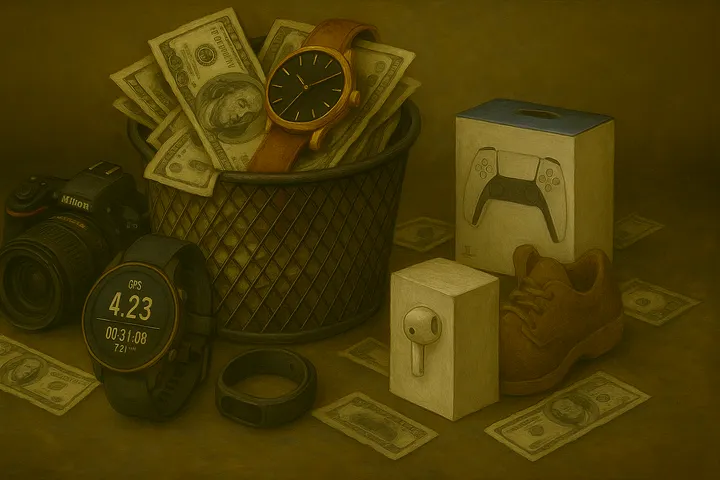
AI-generated image created by the Author using ChatGPT
In this article, I'll be talking about products we buy purely for motivation or to give us a boost, but often end up discarding without properly using them. More precisely, I'll be criticizing this "buying on impulse" behavior that we all engage in, and I'll try my best to explain how motivation can only come from within, and how we can cultivate it by fighting against ourselves.
The idea for this article came to me while I was on my way to pick up my new running watch. I thought I'd elaborate later, but I jotted down a few sentences right away so I wouldn't forget. Because I was very, very excited about my new watch. I want to talk about that a little.
Is a Running Watch Really Necessary?
Up to a certain point, of course, it's not necessary. If you always run in a group, the group's pacer will already be monitoring your speed and condition. A good, attentive, and enthusiastic pace setter will listen to the group's breathing, notice those who are struggling, have high heart rates, or are having difficulty, and slow down the pace. Or, if there's another pace setter to keep the rest of the team running, the other will slow down and gather those who might fall behind.
Note: Runarchy Running Club runners reading this might say, "When did you become a pace setter to be talking like that?!" I can't say I'm particularly interested in being the front pace setter in our group, and they'd be right. I'm here to relax anyway; I don't want to worry about our pace, the team, the hills, or anyone falling behind… Honestly, I've never volunteered because I couldn't be bothered, but when the task falls to me, I do a great job because I'm usually the one gathering the back. That big-hearted friend who gathers the back without being seen or even noticing, and doesn't leave those who fall behind alone, is often me, just so you know. Regards...
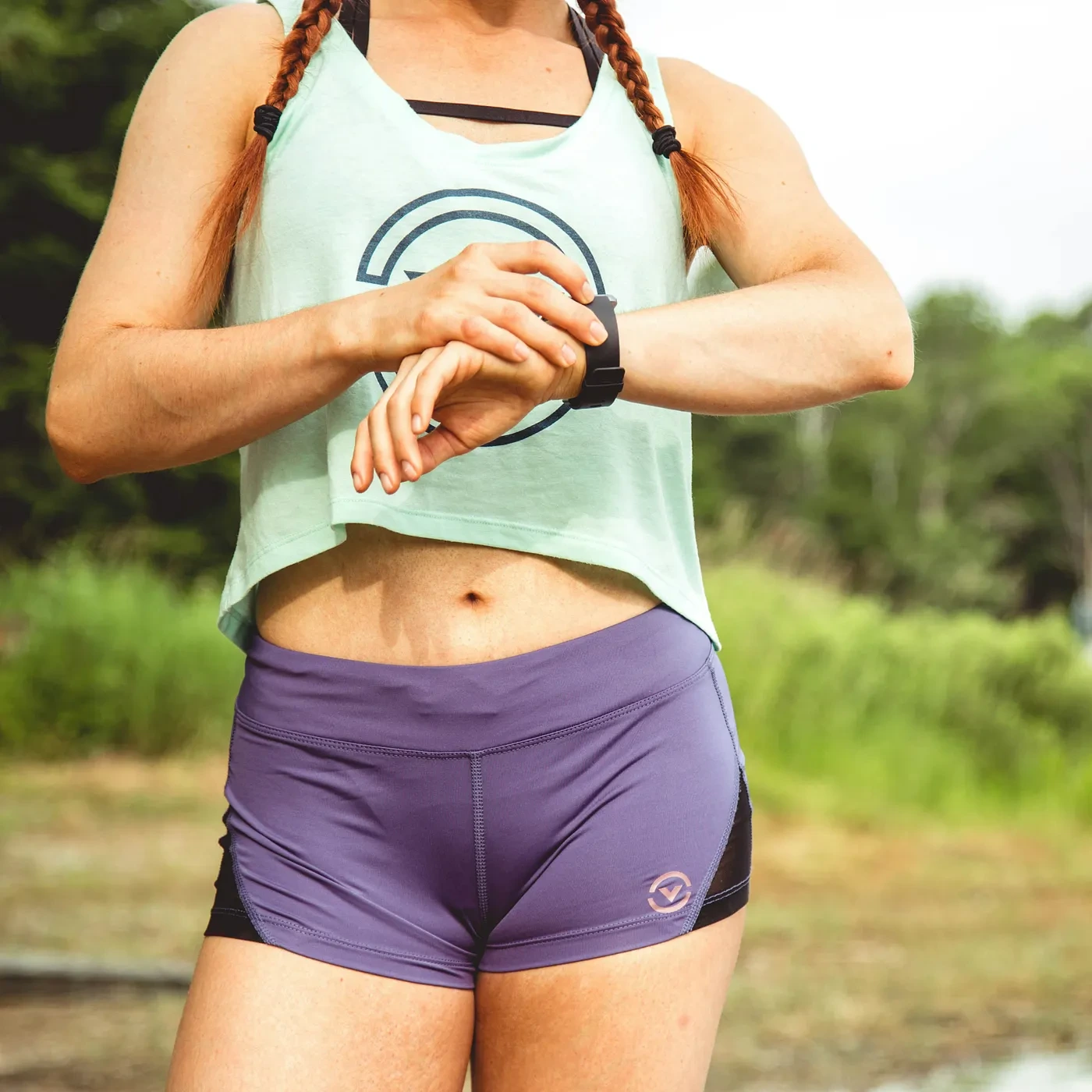
Photo by Alora Griffiths on Unsplash
If you have a phone with a good GPS receiver,
If you don't have goals like long or fast runs,
If you're not working with a running coach,
If you always run in a group,
If running is just a hobby for you to work up a sweat, or even a weight loss tool,
If you're not running on unfamiliar routes where you could get lost, like in the forest (it's very difficult to get lost because some watches have route loading features),
If you don't need precise measurements like altitude gain or zones (training intensity levels determined by heart rate, pace, or pulse changes)...
You may not really need a running watch, but know that the GPS receivers in our phones are designed for cars, not human steps, and aren't very accurate for running. Don't complain to anyone with a phone in their hand who has a watch – especially a Garmin – they're usually right.
I don't have any collusion, I just like Garmin.
I needed a watch because:
I love long, trail runs,
I need a route loading feature and accurate measurements,
I have a phone that takes very poor measurements,
I don't want to drain my phone's battery by running with GPS on during races,
And I like to track my life, from my step count to my daily calories burned and sleep quality, through my watch.
My first watch was a Garmin Forerunner 235. I've been on so many runs and trips with my trusty old watch; we've overcome so many challenges. We even went to the army together.
It accompanied me on two 63K races, two 35K races, one 33K race, several half marathons, and dozens of 10K races. Including training time for these races, we've covered over 3000 kilometers in 5 years. I covered this much distance even with the lowest-end Garmin running watch. It's easy to say, but easy to write about.
If you'd like to read more about my journey of developing self-discipline and why I run, here are some of my articles waiting for you:


If you’re wondering why I run — I’d really love for you to read this one. It’s one of my sweetest pieces:

Of course, everything has a lifespan. My poor watch couldn't last, and its battery started dying every day. One day I took it off and never wore it again. Now that I'm preparing for a new race, I naturally need a new watch. I got another Garmin. To be honest, this time it's the Forerunner 965 model. I've wanted to upgrade for a few years. The 235's battery life was very short; it would last 4-5 hours with GPS on. I used to carry a power bank for longer races; imagine what would happen during the race…
Thank you so much for your efforts, 235; your turn, 965…
What is a "Buying on Enthusiasm"?
“I'll write in this notebook every day.”
“With this watch, I'll definitely start exercising.”
“I'll take amazing photos with this camera.”
“I bought these books because I'll read more.”
“I bought new shoes, now I can't skip walks.”
“I bought this scale, I'll weigh myself every day and lose weight.”
…
Does this sound familiar?
A "chance purchase" is a shopping behavior undertaken not with the intention of actually using something, but to experience the excitement of a dream. It's not a real step towards change. It's a "pretending to start." You feel motivated at that moment because what you're buying gives you a feeling of being a "new you." But this motivation isn't permanent because it's external, not internal; it depends on the product, not on you.
This behavior is a cycle:
You dream about it.
You shop to feel motivated.
You use it for a few days or not at all.
Motivation drops.
Guilt sets in.
A new enthusiasm arises, you say, "This time I'll do it."
The cycle begins again…
In fact, we think we're buying an identity with this purchase:
—I bought a running watch = I'm a runner.
—I bought a planner = I'm organized.
—I bought a bookshelf = I am reading.
But identity is not only established by possessing objects, but also by making behaviors habitual, built through repetitive actions. If you run, you are a runner. If you write, you are a writer. If you read, you are a reader. What you do, not what you buy, defines you.
In psychology, we explain this behavior with the theory of symbolic self-completion. A person tries to "complete" an identity they want to achieve but do not yet possess by acquiring objects associated with that identity. Someone who is just starting to run buys a professional running watch to feel more "real." Someone who wants to start writing chooses the most beautiful notebook, the most special pen. Because the mind sends this message:
"If you have this, you can be that person."
From another perspective, this is a kind of compensatory consumption. A person feels inadequate because they haven't yet done regular exercise and tries to fill this void with shopping. The excitement that comes with buying something new gives a temporary feeling of success. We feel as if we have started; But we only made a purchase.
This feeling has another scientific name: the fresh start effect. A new year, a Monday, or a newly purchased sports watch… They are all calls to the mind to “erase the past and start anew.” They create high motivation, but often this effect is temporary. I will get to the scientific aspects later and give more details.
Therefore, in this article, I want to talk about how we can find real motivation without chasing after fleeting enthusiasm. Because what I believe is this:
“Motivation is not bought, it is built.”
“Motivation doesn’t come out of a box, it blossoms from your heart.”

Photo by Tegan Mierle on Unsplash
Where Does Real Motivation Come From?
Motivation doesn't come from the outside. It doesn't come out of a box, it's not triggered by a discount. It's not downloaded or updated from the Google Play Store. Motivation begins with small steps. And as those steps are repeated, it turns into a self-fulfilling cycle. So instead of ordering, ask yourself:
“Am I already doing this?”
“Do I really need this, or is it an identity need?”
Because if you're already doing something, getting a better one is a proper upgrade. It's not a reward, it's a deserved tool. But if you're not already doing it, you work for the new product, not the other way around. You buy a product to build on a habit you already maintain.
My first running watch, as I said, was the lowest model and second-hand. A friend's older brother had used it very little. Yes, my first watch was exactly someone else's whim purchase. A Garmin Forerunner 235. I bought it when I wasn't even sure I'd like running. It was affordable enough that I wouldn't regret the price I paid, but you know, I've run, climbed mountains, and competed in races for years. When it wasn't enough, when it really wasn't enough, I upgraded. It even broke down, it wouldn't charge. To be honest, I didn't bother trying to get it repaired because it was a very old product.
The same applies to all products and hobbies:
The point isn't to buy the most expensive shoes when you first start running. If you're still running in those affordable shoes that hurt your feet and have worn soles… then you're already a runner. If you're preparing for a race, if you don't want to get injured, then you buy something better. Because by then you know what you need.
Buy a better product not to start running, writing, or sports, but to improve what you already do. Reward your habit, not your enthusiasm; meet your need.
Just try starting with a student bağlama (Turkish string instrument) or a student guitar; maybe you'll find another hobby you enjoy more. You really don't need to hang a fortune on the wall.
You might think I'm starting to sound like your parents, but you're completely wrong. This perspective will lead you not just to spending less, but to more genuine and sustainable motivation.
“The longer you do something, the more passionately and regularly… then it’s time to upgrade. Habits should take precedence over shopping.”
Scientific Foundations
Without tiring you too much, I will briefly touch upon what science and psychology say about this.
1. Symbolic Self-Completion Theory
According to psychologists Wicklund and Gollwitzer, people try to "complete" their incomplete identities by acquiring objects that represent that identity. For example, buying a running watch can give a person the feeling of getting closer to their runner identity. But it is the action, not the object, that makes that identity real.
2. Compensatory Consumption
According to the studies of Rucker and Galinsky, when people feel incomplete, unsuccessful, or inadequate, they try to compensate for this void by shopping. Someone who hasn't started running might try to compensate for this feeling of inadequacy by buying "professional equipment." But this external solution does not reinforce internal motivation.
3. Fresh Start Effect
A new year, a new week, new shoes… all can trigger a feeling of “starting over” in our minds. While this wave of motivation is powerful, it doesn’t always become a sustainable habit. (Dai, Milkman & Riis, 2014)
4. False Hope Syndrome
How to Build Motivation?
I can almost hear you saying, "That's all well and good, but how do I do it?" Well, here's the best list that works for you.
Get to know yourself well, observe yourself. For example, are you a morning person or an evening person?
Set the smallest sustainable goal (like walking 1 km every day).
Plan your day/week: your run, rest, meal… so it's easier to stick to your plan. Don't think "What should I cook for dinner?" every evening at 6 PM, for example.
Get social support: a running group, training buddies…
Keep notes: see what you're doing, notice your progress.
Stay focused. That is, try to remove the obstacles that stand between you and your goal.
For example, here's a great goal:
"I will read a book every evening between 11 PM and 11:30 PM."
Try to stick to this as much as possible. Act as if you have no other choice; For example, instead of turning off your alarm at 10:59 PM that says, "Get up, you're going to read a book!", as if you were going to work, stop whatever you were doing before. From 11:00 PM onwards, say, "I'm gone." "I'm gone from this world." Prioritize your goal that much.
That's when the money you spend on buying books won't be wasted. Reading will become a habit not when you buy new books, but when you set clear goals like this and start reading.
Before the Hills Begin: The Road to Kaçkar
I am currently preparing for the Kaçkar Ultra 50K race, which will be held at the end of September. Another long, steep, cold, muddy and perhaps snowy track awaits me. Depending on the weather conditions, it might be the toughest race I've ever participated in. This will be the race where my elevation gain will be highest, that's for sure.
But these don't scare me. On the contrary, it excites. Because every uphill means turning inward a little more, and every downhill means becoming a little more free. Running is more than a race for me. Sometimes I go on the road to clear my mind, sometimes to test my body, sometimes to watch the shades of green and brown, and sometimes just to hear the sounds of the forest.
When you train for a race, you have to fuel motivation with a purpose, not a product. Because in the middle of the mountain, "I bought these shoes, come on, motivate me." You don't have a chance to say. That's why I remind myself of the same thing while writing this article:
"It's not the running watch, it's not the shoes, I'm the one who's going to run. I'm going to keep going."
Speaking of which, if you follow me on Instagram, you know that I follow a strange program.
Day | Traınıng type | Detaıl |
|---|---|---|
Monday | Power lifting | Chest + back + fore arm |
Tuesday | Capacitive tempo run | 6-10 km tempo run |
Wednesday | Power lifting | Legs |
Thursday | Interval or hill run | 12x400 (varies weekly) |
Friday | Power lifting | Shoulders + back + back arm |
Saturday | Rest | Foam roller |
Sunday | Long trail run | 12-15 km (varies weekly) |
In Monday's weight training, there is a bench press and 70 kilos... I know, I know. “What does powerlifting + running have to do with it?” you’ll say, but I just love it. I like to go to the gym early in the morning, get under that weight and lift it up. Well, it's a bit tiring, of course. Let it be. When I look in the mirror, I have a more aesthetic appearance than dozens of runners; I'm stronger, more majestic than most, and I like it. I won't be on the podium in the race. Running slowly is not a bad thing in the Ultra world. When I look at my tempo values, I cannot say that I am slowing down. This is my speed and my training, brother, who cares? :)
Don't take me as an example again. It is not training advice. If you injure yourself, don't blame me.
Conclusion
As I said, “It will happen this time.” Stop buying things just because. “Didn't it happen again?” Whatever you say, get up right now. Set any goal you want. It doesn't have to be sports; Make it about whatever you want to do. Know yourself, clear your time, set your alarms and reminders. Write your goal on the refrigerator, on the mirror, anywhere you constantly look; Let it remind you every time you see it. Then run to your goal without knowing any obstacles. That's motivation.
Frequently Asked Questions
▸What is 'buying on enthusiasm' or impulse buying for motivation?
It's shopping not to actually use something, but to experience the excitement of imagining a 'new you.' You feel motivated at purchase, but the feeling fades quickly because it depends on the product, not on internal drive. It's a cycle of dreaming, buying, barely using, feeling guilty, and repeating.
▸Why doesn't buying a new gadget create lasting motivation?
Because the motivation is external — it's tied to the object, not to you. Once the novelty wears off, there's nothing sustaining the behavior. Real, lasting motivation has to come from within and is built through consistent action over time.
▸Do you really need a running watch to start running?
Not necessarily. If you run in a group, use a phone with GPS, have no specific performance goals, or just run for fun or fitness, a dedicated running watch isn't essential. However, for trail running, long races, accurate measurements, or battery conservation, a watch becomes genuinely useful.
▸What are the signs you actually need a running watch vs. just wanting one?
You likely need one if you do long trail runs requiring route loading, need precise data like altitude or heart rate zones, have a phone with poor GPS, or want to track health metrics like sleep and daily calories. If none of those apply, your phone may be enough.
▸How do people confuse owning things with having an identity?
People tell themselves 'I bought a running watch, so I'm a runner' or 'I bought a planner, so I'm organized.' But identity isn't built by possessing objects — it's built by making behaviors habitual through repeated action. The object alone doesn't make you the person you want to be.
▸What is the typical cycle of impulse buying for self-improvement?
The cycle goes: dream about a new version of yourself, buy something to feel motivated, use it briefly or not at all, lose motivation, feel guilty, then find a new enthusiasm and repeat. Each loop feels like a fresh start but rarely leads to lasting change.
▸Why do phone GPS receivers fall short for runners?
Phone GPS receivers are designed for car-level navigation, not the precise, step-by-step tracking that running requires. This makes them less accurate for measuring running pace and distance compared to a dedicated running watch with a purpose-built GPS.
▸How do you know when upgrading a gadget is a genuine need vs. an excuse?
A genuine need is tied to specific limitations — like a watch battery dying mid-race or a phone draining during a long run. An excuse is when the upgrade is driven by excitement or the idea that new gear will somehow create discipline you don't currently have.